Hi Dan
Without prejudice
Regarding the DME, Paul had one fitted to is car and unfortunately it didn't fix the fault, along with two GPF filters, an engine strip down, and a new engine, and a new turbo.
Whats funny is that emission software recalls have been carried out on other Porsche models post 2019, yet our cars seem to be excluded.
Interesting your view regarding the IMS bearing issue, when I started work at my local Porsche independent years ago I was introduced to the IMS problem, having no Porsche experience at all it was a great learning curve.
I carried out some research and found that Porsche had reduced the size of this bearing from a double row to a single row grease filled bearing.
The failure rate on the single row bearing was considerably higher than the double row bearing fitted to the earlier cars.
I was amazed that Porsche didn't have a replacement bearing, you could only get a new bearing with a new IMS shaft, in them days well over £800.00+ vat.
But unfortunately you had to remove the engine, strip it completely down to fit the new shaft.
I started fitting LN Engineering IMS ceramic bearings using a special tool to extract it from the shaft, after removing the gearbox and flywheel.
So my question is, Porsche made this problem, but couldn't be bothered to even offer a solution to fix a design problem they created.
They could have easily supplied the bearings seperate and the special tools to do the job.
Yet in the States they where taken to task over this design issue and had to pay for new engines.
I spent over 6 years at this independent Porsche Garage and replaced alot of IMS bearings, this was a big problem for our owners, and a big cost, and it still is.
So here we are again with another fault on these 718 cars that was clearly wrong from the start.
They confirmed this on the memo that was sent out to the Dealers in March last year, and yet again they are leaving their customers to try and cope with this fault.
They are clearly not bothered of the affect this is causing their customers, the loss of confidence in these vehicles, the depreciation affect on these cars is not good, never mind the damage to the Brand.
They should be bothered, and I suggest that any owner of a 718 2.0 or 2.5 2019 onwards vehicle, thats worried about this potential issue, that they contact their local Porsche Dealer and get them to check the GPF readings.
This can be done while the car is in for a service, because its part of the service to carry out a Val report.
If the dealer wants to charge for this check, and the cars not in for service, or any diagnostic repair, then the owner should pay for the check.
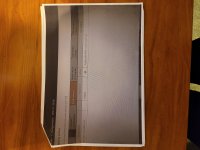
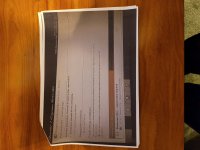
You need the print out, or screen shot showing the GPF readings which need to show the following values.
Soot calculated and measured values
Oil ash load measured value in %
Differential pressure, current value in hPa
If you see both soot values K211 & K221 at around 0.00% , and if the high oil ash measured value K231 % is high, and the differential pressure value K251 hpa is very low, then ask the Dealer to contact Porsche direct to register a claim for a manufacturing defect.
We have seen very high oil ash % values on very low mileage cars, which clearly is not correct. And we know there is no physical ash causing this fault, along with no back pressure recorded from the differential pressure sensor.
If you are in any doubt of the readings you are seeing please contact us anytime.
We have written confirmation from Porsche Reading Technical on one of our vehicles that had a modified filter fitted in 2024, confirming the fault to be that of a manufacturing defect on file.
The Dealer can supply you with a case number, and with these case numbers we can ask Porsche to look at this issue with more urgency.
I saw the other day an article saying that EV owner's are requesting a Battery condition check when the cars are serviced, and especially when they are purchased and sold.
We should do the same regarding the GPF condition, this again may help us understand how big this issue is, and may provide more data which could help us going forward in fixing this issue.
Any other suggestions would be greatly appreciated, we have 125 thousand views on this subject, thanks for your views.
Unfortunately views don't make prizes, but what they do show is the interest in this subject. We need the owners of these cars to help us fix these cars.
Regards
Dave