Menu toggle

Cayman 718 GPF Failure

I don't know, but guess that this issue is now common knowledge in the '2019 Cayman' 4 pot community.
It will also be on the check list for a potential buyer of these great looking and fast cars.

Going public risks the whole of the 718 generation car being tared with the same brush, bit like RMS/bearing issues on 986/996 etc which a small number of cars suffer from, but is a real worry for a buyer (as it was for me looking at a 996 and ended up buying a Gen2 987.2 Boxster instead).

I would think contacting the Trading Standards people a good first move, but going public will hurt the OPC much more and mybe open thier minds, but i thing they are under 'orders' to ignore things from the factory.

Who know, but it does feel like the wall of silence needs a different approach. The owners have to stand up?
 
Hi Dale

Without prejudice

Yes the majority of our cars have been 2019, built at the Stuttgart- Zuffenhausen plant, but we have seen some issues on later cars but not of the same volume, thankfully.

We are still getting reports from our owners that the Dealers are still trying to charge for replacing the GPF filters, using the excuse that the car hasn't got full Porsche Service history.

When you read the information on the Porsche memo sent to the Dealers in March last year its very interesting.

The internal memo also details important checks to be carried out regarding high ash loads found on their vehicles.

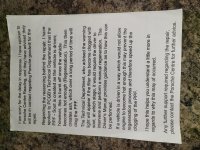
This is the paragraph regarding the instructions, Ive added this so that none members can see what was written below.

Several causes of the high ash load have been found across various vehicles therefore to prevent repeat issues it is important to check all possible causes of high ash load before proceeding with any repair.
These include completing cylinder leakage checks to ensure oil is not entering the cylinder, checks of the intake and exhaust for signs of excessive build up which could be a result of a leak from the oil separators, turbocharger or valve stem seals.It is also important to check the operation of the turbocharger actuator to ensure this is functioning correctly and check the OPF differential pressure sensor for correct functionality ensuring the pipes to the diferential pressure sensor are not blocked or restricted.

So these instructions have not been carried out correctly, if the differential pressure sensor pipes have been checked for restriction, or blockage, then surely the next check would be a back pressure check to confirm the sensor reading accuracy.

These pipes are already disconnected so connecting a manometer to the supple pressure pipe to measure the actual back pressure of the GPF would have been easy.

At this point they would have found no back pressure present to support an algorithm ASH calculation of the 100% recorded.

So if back pressure was non existent then it total dismisses the next instruction on the memo which was written below.

The service history of the vehicle sould be checked and its confirmed that the correct low Ash oil has been used on all services.

We then move on to the last paragraph below.

If no causes can be located and all the above checks are all confirmed as OK, then in some cases the OPF can be recovered therefore a OPF regeneration should be attempted to see if the OPF ash load is able to reset.
If this has already been attempted or the ash load level doesn't not reset when the OPF regeneration is attempted then the OPF should be replaced, and the vehicle retested.
The new OPF's (982254400AF) have been modified to prevent this issue. All vehicles with a production date later than December 2019 should already have the modified OPF a d are therefore not relevant to this document.If there are any issues outside of this model year range please submit a PRMS ticket to Porsche.

So there you have it, they have been aware of this issue for a long time, they built these vehicles without the facility to adapt (zero) the differential pressure sensor and the OPF after replacement or durring service. If this is not carried out the algorithm that calculates the Ash cannot function correctly.

Instead they have had to carry out soot regenerations in an attempt to clear ash from the OPF, that wasn't there, to try and reset the algorithm to zero.

They also didn't carry out the instructions to test the new OPF when it was fitted, for Ash coming back on the earlier cars.

When we got involved with the 13 cars that had the new GPF,s fitted at Porsche,s expense we made sure they returned to the Dealers and the ash level check was carried out.

What we have found is the Ash comes back at an unacceptable level, which can not be explained by the Dealers, they just say Porsche says its ok.

All we did, was to look at the GPF data to see that on every car without exception the differential senser reading made no sense at all, and the lack of soot present on a supposedly blocked GPF definitely made no sense at all.

If the GPF was blocked, where was the soot going and why was the car driving perfectly, even with the EML light on.

So how can Porsche and their Dealers still insist that this fault is caused by the customer using the wrong engine oil and doing short journeys.

This is a manufacturing defect, that was built into these cars right from the beginning, they have confirmed this in the internal memo.

Its about time they started to help their customers with this fault, because this has been a major miss-diagnosis right from the start.

A simple back pressure check carried out would have pointed Porsche Technical into a different direction in trying to fix this issue, and the algorithm would have been a good place to start.

How many of these working GPF filters removed and sent back to Porsche is it going to take for the penny to drop.

Its no wonder they are an exchange part with a £775.00 + vat surcharge cost.

Dave
 
Sorry everybody

Without prejudice

It always happens to me when I send out a post, I forget an important fact that should have been on the last post.

So here it is.

We must not forget Paul,s GPF journey last year and the battle he had trying to get Porsche to fix his 2019 2.5 Boxster GTS with this Ash issue.

He had a exchange GPF fitted that didn't fix the ash issue, he then had a brand new GPF fitted and that didn't fix the car.

They carried road tests and PWIS checks on these new filters and they realised the GPF wasn't the issue.

They then removed his engine, stripped it down looking for internal oil consumption issues, none found. Road tested again, no change in the ash reading.

If you remember this was the instruction in the internal memo.

They then went on to fit a brand new exchange engine that made no difference to his current high ash level, and then they fitted a new turbo, which again didn't make any difference to his ash reading.

So between Porsche and his Dealer they gave him his money back, because they couldn't fix his car.

This is why we are 100% certain its a software issue, not an exhaust issue.

Dave
 
Hi Mark

Without prejudice

Yes its Game set and match.

The problem now for Porsche and their Dealers is, they are so in deep with this obvious miss diagnosis, its going to be difficult for them to explain to all their customers that have suffered this fault on these cars, why this mistake has happened.

And the longer this goes on the worse its going to be.

We know that the Dealers are not allowed to deviate from the Porsche AG technical test plans, and approved repair paths.

But these workshops are not owned by Porsche, and neither are the technicians, they are owned by private well respected companies who have been in the motor trade for years.

So why can't they do these back pressure checks, tell our customers the truth, show them the evidence, and put pressure on Porsche to do the right thing.

At the end of the day if Porsche lose a 718 customer to this fault, so does the Dealer.

To many owners have had to sell their cars because between the Dealers and Porsche they have not been telling the truth.

Dave
 
Hi Mark

Without prejudice

Here I go again, forgot on Paul's car it had the DME, and 2 differential pressure sensors replaced also.
Dave
 
Hi Mark

Sorry old age and memory loss, yes your right it did have an AOS early on in the repair process.

Thanks for that info

Dave
 
Hi Dave.

that in its self is quite interesting if it is a batch of Stuttgart- Zuffenhausen built cars and none from the OSNABRÜCK VW FACTORY.

It begs the question as to what is different between the two factory’s.

Dale
 
Hi Guys & Girls

Without prejudice

To continue on with our questions on why this ash value is coming back so quickly after a new GPF is fitted.

I have used this Google search text below to see what comes back.

If a gpf filter is showing an 100% ash value, and the filter is replaced how is it possible for the ash to come back at an average of 50% when there is no back pressure present, and no soot present.


The most likely reason for an ash reading of 50% after a GPF replacement is thatthe Engine Control Unit (ECU) has not been properly reset or has not completed its adaptation cycle for the new component.


Nature of Ash Measurement
Unlike soot, which is measured using differential pressure sensors, ash is a calculated value. There is no physical sensor that detects ash levels. The ECU estimates ash accumulation based on:
  • Total lifetime fuel consumption.
  • Total engine hours.
  • Oil consumption patterns.
Because ash is a permanent byproduct that does not burn off during regeneration, the ECU assumes it will only ever increase. If you replace the physical filter but do not perform a "GPF Reset" or "Component Adaptation" via a diagnostic tool, the ECU continues to use its historical mathematical model.


Why 50% Instead of 100% or 0%?
If the value dropped from 100% to 50% without a manual reset, several technical factors could be at play:
  • Differential Pressure Offset: Even though you state there is no back pressure, the ECU compares the "expected" pressure of a full filter (from its memory) against the "actual" low pressure of the new filter. The algorithm may "split the difference," lowering the calculated ash value while still waiting for a technician's confirmation of replacement.
  • Partial Reset: Some diagnostic tools perform a "soot reset" but fail to fully clear the "ash mass" register, leading to a corrupted or averaged value.
  • Sensor Calibration: If the differential pressure sensor was not zeroed during the replacement, a slight voltage offset may be interpreted by the ECU as a partial restriction, which it attributes to ash.


Key Consideration
To resolve this, a Service Regeneration and a GPF Replacement Adaptation must be performed using an OEM-level scan tool. This forces the ECU to overwrite its historical data and start the ash calculation from
zero.

This is why a simple back pressure check has always been critical to confirm that the GPF is not blocked with Ash, so it would not require replacement and confuse things.

So with the GPF out of the way, we are left with the situation that these cars do not have an adaptation facility to do the reset.

From day one this has been the issue on these cars, they couldn't do this reset on the cars found to be faulty during the manufactures warranty period.

So they made a decision to modify the GPF filter, and it was fitted on production on cars built after December 2019.

We have been involved in 13 of these cars that had new modified filters fitted, and Porsche paid for the replacement, because of our intervention.

They all came back with ash reading, either around 50% or sometimes higher .

I would strongly suggest that anybody who has the fault code P242F ash load to high at 100%, insist for a backpressure check to be carried out.

We know this back pressure check was never part of the Porsche AG Technical test plans and approved repair paths, and it wasn't even required in the Porsche internal memo information on the checks to do when this fault code was present.

So let's get these cars diagnosed correctly, and let's get Porsche to fix this manufacturing defect on these cars.

We have never had an explanation on why the soot warning light as never been seen on our dashboards, and why soot is never present when the filter is supposedly blocked at 100%.

Let's not forget Porsche Technical Reading confirmed this to be a manufacturing defect last year on one of our cars, we have the email with case number to confirm this.

Dave


Hi Dave

Without Prejudice

Why do Porsche continue to mis-diagnose this issue, and continue to charge customers £9000 and it still doesn't fix the problem? They've got a bloody nerve!!

These dealers are either involved with sweeping it under the carpet or are totally incompetent, why don't they have the balls to say to Porsche, we are doing a back pressure check because we believe these filters are not blocked!!

Porsche must be sending these filters back to the manufacturer, what are they saying about it? or are they part of the mis-diagnosis because they know these readings are not true or accurate!!

Regards

Mark
 
Hi Guys & Girls

Without prejudice

Enclose a quick video showing how easy it is to confirm that a differential pressure sensor is behaving correctly, but more importantly a check with a manometer to see actual exhaust back pressure.

In this case the back pressure was acceptable, the sensor was at fault.

The Porsche labour time to replace a sensor on our cars is around 1.5 hours, includes removing the engine front cover behind the seats.

It wouldn't cost much more time to check the pressure while you are in the area.

Why is it that all the Dealers who checked and diagnosed all our cars have not carried out this simple check.

Yet look at all the time that was spent on Paul's car, replacing the following.

1. 2 GPF Filters
2. 2 Differential Pressure Sensors
3. AOS
4. 1 DME
5. Engine removal, strip down looking for signs of internal oil consumption.
6. Brand new engine fitted
7. New Turbo

Result the ash level was still present on the car, car was not fixed with a zero ash reading that remained on the car while the car was still in the workshop.

The car never went back to Paul.

So why wasn't the back pressure checked before all these parts were fitted, a question to put to Porsche Technical to answer.

Dave

 
Hi Mark

Without prejudice

Yes your right, they have got a bloody nerve trying to charge their customers for what is a manufacturing defect.

If we go back over the last few years, the Dealers made sure the Porsche Extended warranty didn't cover the GPF filter, even though it wasn't listed in the exclusion section of the policy.

They classed the GPF as a service part, just like a air filter, which wasn't covered by this policy unfortunately.

This is what I found on a Google search.

If the Gasoline Particulate Filter (GPF) is not specifically listed in the exclusion section of your extended warranty, but the warranty company claims it is a service part" or "wear and tear" item, you are in a contract dispute over interpretation. A GPF is designed to last for the life of the vehicle, so classifying it as a "service item" (like oil or brake pads) is often a tactic to avoid high-cost, premature failures.
Here is what generally happens and how you should handle it:

The Legal Standing
• Ambiguity Favours the Consumer: lf the GPF is not in the "Exclusions" list, the policy is ambiguous. The Financial Ombudsman Service (FOS) in the UK, for instance, is likely to construe this ambiguity in your favour.

Ambiguity Favours the Consumer:
lf the GPF is not in the "Exclusions" list, the policy is ambiguous. The Financial Ombudsman Service (FOS) in the UK, for instance, is likely to construe this ambiguity in your favour.

Obviously this would have been devastating to hear when their customers were stood in reception trying to understand how the GPF failed, with no affect on engine performance, or economy, just a warning light on.

And to make matters even worse when they asked what has caused this fault, usually the answer was either the wrong engine oil has been used, or you have done to many short journeys which blocks up the filter with ash, or you have not used Porsche for all your services.

Then eventually they were told the repair would be around 8K, now over 9K, which would really have been the final straw.

They obviously assumed that the diagnosis of this fault was carried out correctly, and professionally, how wrong they were to assume this.

So when the internal memo came out in March last year, it turned things completely upside down.

The memo confirmed that if the ash % would not reset to zero after a soot regeneration, then it had to be replaced with a modified filter which was brought out to fix this very issue.

And to really rub salt into the wound, the memo confirmed that these modified filters were fitted to post December 2019 cars.

So they were well aware of this fault way back then.

Just imagine how many of their customers got rid of their cars after this devastating news, we are well aware of some of these people on our database because we tried to support them.

To make matters even worse, the new modified filters that were fitted on our watch, have failed to fix this fault, eight of these owners sold their cars because of the stress and the Dealers attitude when they returned with the car.

The remaining five customers are driving round with ash % values far to high for common sense, and are not happy with the outcome.

Its absolutely ridiculous that after the miss diagnosis of this fault by the Dealers and Porsche, they are continuing to try and charge for this manufacturing defect.

We are really struggling to get any Dealer to carry out a simple back pressure check on their owners cars, its unbelievable they can have this attitude even now.

Its obvious that it will be difficult now for Porsche and their Dealers to tell the truth about this issue, but to carry on with this attitude towards their customers is not the way to go on.

We will keep going until Porsche excepts responsibility for this fault.

Dave
 
The sad thing is Dave Porsche will not accept responsibility and sadly those affected are relying on the information provided by you to argue the cost when they shouldn’t need to. Porsche clearly do not care about those with this issue otherwise they would have stepped up to the plate and taken responsibility from the start.

I understand that many have had their cars repaired under warranty, after a fight I might add, but why should they have to fight for something that is clearly a manufacturing fault? For me I’d take this further ensuring that Porsche sit up and take note as it’s quite obvious that no one is listening at PGB or the mother ship. If I had one of the affected cars I’d be shouting it from the rooftop.

Dan.
 
So the Dealer cannot do the pressure test to determine ash etc. Beyond their tool kit, or are not allowed to because the answer is the filter is not blocked, the computer program just says it is. Thus, the computer is wrong, poor design or a variable sensor driving it. This is a cost to Porsche in the repair (which does not work correctly either?), and probably a lost Porsche owner who has lost faith in this 'Premium Brand' and goes to buy a BMW Z4M.

Porsche do not care clearly to lose the buyer, and leaves these early cars to fall to a low value just as IMS, bore score, engine mounts, AOS etc have done before on 996, Boxster, Cayman and 997s.

There is little said of the trade outlook on these cars which must be a real negative to them as they will have no answer to a buyer when the light comes on except the same £9K quote and a possible legal challenge to the dealer, but maybe this is more 'Buyer Beware'; if you do your research this lot will crop up (like IMS etc did), so if you buy then the risk is / partly the buyers problem??

I personally have been a Porsche person for 38 years now, have 2 of them and a hillclimb car with a 3.2 aircooled engine in it. ('73 911, 2009 Boxster, Lola race car), and feel disappointed at this story showing Porsche for what they now represent.

I, let alone the wife, would never buy a modern one of this era, I can't be alone?
 
Hi Guys & Girls

Without prejudice

Following on from recent posts regarding the correct diagnosis of our suspected blocked GPF filters, I downloaded this information regarding VW GPF diagnosis.

To confirm a blocked Gasoline Particulate Filter (GPF) on a Volkswagen, you need to use an OBD2 diagnostic tool (such as VCDS, OBDeleven, or Autel) to check specific live data and error codes. Because GPFs operate similarly to Diesel Particulate Filters (DPFs) regarding soot management, the diagnostic route focuses on pressure, temperature, and calculated soot loading.

Diagnostic Steps & Route
Scan for Diagnostic Trouble Codes (DTCs)
Access the Engine Control Module (Module 01).
Look for fault codes indicating restriction, such as:
P2463 (Particulate Filter - Restriction/Soot Accumulation).
P154B (Particle Filter Pressure Sensor - Implausible Signal).
P2002 (Particulate Filter Efficiency Below Threshold).
Check Live Data (Measuring Blocks/Values)
Navigate to Advanced Measuring Values within the Engine Module.
Search for "Particulate Filter" or "Particle Filter" and select the following:

Particle Filter - Soot Mass (Calculated): The ECU's estimate of soot buildup based on driving conditions.

Particle Filter - Soot Mass (Measured): The actual soot level based on sensor readings.

Particle Filter - Differential Pressure: Measures the pressure difference before and after the filter.

Particle Filter - Exhaust Gas Temperature (before/after GPF): Ensures the filter is getting hot enough to regenerate.
Analyze Pressure Readings (Crucial Step)
With the engine at idle, the differential pressure sensor should typically read a low value (ideally under 10-15 HPA/millibars).

High Pressure:
If the pressure is high (e.g., above 30-40 mbar) at idle and increases rapidly when revving, this indicates a blocked GPF.

Erratic Readings:
If the pressure does not change with engine speed or stays very low despite a warning light, the pressure sensor or its hoses may be faulty.

Check Regeneration Status:
Check Time since last regeneration. If this is high and the soot mass is high, the car is failing to clear the filter.
Confirming the Blockage

Failed Forced Regeneration:
If a forced regeneration is attempted using the diagnostic tool but the soot load does not decrease or the pressure remains high, the GPF is likely permanently blocked or physically damaged.

Physical Inspection: Inspect the hoses leading to the pressure sensor for damage, splits, or blockages, which can mimic a clogged filter.

Key Observations
A blocked GPF often results in a "Check Engine" light, and in severe cases, the car may enter "limp mode" (loss of power).

Ensure that the GPF, rather than a faulty differential pressure sensor, is the issue before attempting to replace it.

So let's look below at the recent check instructions written into the Porsche internal memo, sent out last March to the Dealers to deal with this GPF issue, which starts with the DTC P242F ash load exceeded.

You will see that ASH is not even mentioned in the VW diagnostic information.

And we never see differential pressure sensor readings exceeding 7.0 hPa on a GPF with a 100% Ash value, that Porsche says needs replacing.

The Porsche memo instructions:

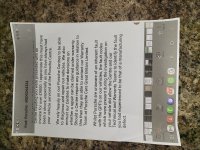
Several causes of the high ash load have been found across various vehicles therefore to prevent repeat issues it is important to check all possible causes of high ash load before proceeding with any repair.
These include completing cylinder leakage checks to ensure oil is not entering the cylinder, checks of the intake and exhaust for signs of excessive build up which could be a result of a leak from the oil separators, turbocharger or valve stem seals.It is also important to check the operation of the turbocharger actuator to ensure this is functioning correctly and check the OPF differential pressure sensor for correct functionality ensuring the pipes to the differential pressure sensor are not blocked or restricted.

You can plainly see that the VW diagnostic check has far more detail in establishing the correct diagnosis of a GPF filter.

Porsche,s diagnosis regarding the differential pressure sensor is limited and doesn't even include a simple back pressure check, so you can see were its all gone wrong.

With no soot present in either Calculated and Measured values, and virtually no differential pressure found from the sensor readings, how can our filters have ever been blocked.

To make matters worse are Dealers are continuing to not check the backpressure, infact refusing to carry out this simple check, because its not written into the memo instructions.

If they continue to follow a technical instruction thats missing this vital check, then they are complicit in this unbelievable example of a major miss- diagnosis of this fault.

We only need one Dealer to carry out this check on our behalf, to show these filters are not blocked, then its game over.

How many cars have been sold, because of this issue, how many 718 customers have the Dealers and Porsche lost because of this issue, never mind the loss of confidence with the Dealers, and the Porsche Brand.

If you think about it, when Porsche start up production of the 718 Cayman and Boxster with petrol engines again they will need new customers to buy them.

If they continue on with this stupidity and allow these loyal customers to leave the Brand because the Dealers can not fix these cars correctly at the moment, they will have to hope they will be forgiven for yet another manufacturing defect thats not been fixed on their cars.

They should be embarrassed, we expect more from this Brand and their Dealers.

Hopefully they will see sense, because we will keep going till they do.

Dave
 
Morning all,

Without prejudice

Just a bit more info regarding the issue with our cars regarding the fact that both the differential pressure sensor, and the GPF filter could not be adapted on these vehicles we have been involved with.

We have asked this guestion to many of the Dealers that have dealt with our cars, usually a Technician, and they have confirmed every time, the adaptation for the sensor and GPF is definitely not on these cars.

The adaptation of the differential pressure sensor on a petrol Gasoline Particulate Filter (GPF) car is considered part of the Software/Calibration of the ECU, specifically within the adaptations or "coding" segment.

While the sensor is a hardware component and the underlying code that reads it is firmware, the recalibration (adaptation) process does not change the core operating system or the fundamental firmware code of the Engine Control Unit (ECU).

Why it is Considered ECU Software/Coding
  • Adaptation vs. Programming: Adaptation (also known as adaptation coding) involves modifying the stored "learned" values in the ECU's non-volatile memory to match the new sensor's signal.

  • Calibration: The procedure tells the ECU what a "0 mbar" pressure drop looks like with the new sensor installed, ensuring accurate soot loading calculations.

  • Diagnostic Tools: This is typically performed via OBDII using diagnostic tools that initiate "Coding-II" or "Service Functions," rather than "reflashing" the ECU firmware.

Key Differences in This Context

Term Context
FirmwareThe permanent low-level code governing the hardware (e.g., how the chip manages inputs).
Software/CodingThe editable software parameters (e.g., adaptative values, soot, oil, or sensor calibrations).

So bearing in mind we have had quite a few software recalls on other Porsche models over the years to improve emission control, why are Porsche not looking at our cars.

Just a thought

Dave
 

Posts made and opinions expressed are those of the individual forum members

Use of the Forum is subject to the Terms and Conditions

Disclaimer

The opinions expressed on this site are not necessarily those of the Club, who shall have no liability in respect of them or the accuracy of the content. The Club assumes no responsibility for any effects arising from errors or omissions.

Porsche Club Great Britain gives no warranties, guarantees or assurances and makes no representations or recommendations regarding any goods or services advertised on this site. It is the responsibility of visitors to satisfy themselves that goods and/or services supplied by any advertiser are bona fide and in no instance can the Porsche Club Great Britain be held responsible.

When responding to advertisements please ensure that you satisfy yourself of any applicable call charges on numbers not prefixed by usual "landline" STD Codes. Information can be obtained from the operator or the white pages. Before giving out ANY information regarding cars, or any other items for sale, please satisfy yourself that any potential purchaser is bona fide.

Directors of the Board of Porsche Club GB, Club Office Staff, Register Secretaries and Regional Organisers are often requested by Club members to provide information on matters connected with their cars and other matters referred to in the Club Rules. Such information, advice and assistance provided by such persons is given in good faith and is based on the personal experience and knowledge of the individual concerned.

Neither Porsche Club GB, nor any of the aforementioned, shall be under any liability in respect of any such information, advice or assistance given to members. Members are advised to consult qualified specialists for information, advice and assistance on matters connected with their cars at all times.

Back
Top