Menu toggle

Cayman 718 GPF Failure

That's an interesting view, and could be very creditable.
Could well explain the mechanical change to the filter itself rather than software as a solution.

But it has not worked!
Surely Porsche would have not released the change unless proven to resolve the issue, no point in doing that.
 
Hi AndyT718

Without prejudice

Interesting points regarding the heat in the exhaust, our cars unfortunately do not have an exhaust temperature sensor in the GPF filter, unlike the 4.0 cars that have a sensor in both GPF filters.

And they do not appear to have this Ash % issue, that our cars have been struggling with since 2019.

Bearing in mind you need correct exhaust temperature readings to facilitate a regeneration cycle.

Our cars rely on a calculated temperature created by the algorithm, the Catalytic Convertor temperature is also calculated.

Normally if a soot regeneration is required, and it cannot be completed, the driver will be informed by a dashboard message, sadly that system also doesn't appear to work correctly.

This soot driver regeneration system was designed to leave a specific DTC code P2463 , (Particulate filter soot load high).

If this soot regeneration wasn't completed correctly, it puts in another code, 26740

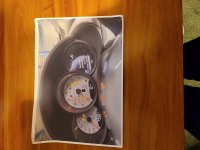
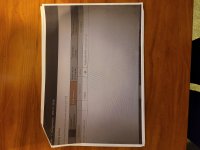
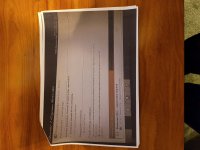
See below three photos supporting the information above.

This would certainly require a workshop regeneration using PWIS, the same that happens on diesel cars, if you ignore the soot warning message.

Yet according to our Dealers and Porsche Technical, our cars have a GPF filter thats blocked up with ASH at 100% and needs replacing.

In our industry its very well known that if your GPF, or DPF is blocked with ASH, you shouldn't even try to carry out a soot regeneration because this can cause other serious issues to your car.

Attempting to force a regeneration on a filter blocked with high levels of ash can cause excessively high back pressure, potentially leading to serious engine and turbocharger damage.

Funny that our cars have no significant back pressure recorded by the differential pressure sensor, and no significant soot values either.

So our Dealers can carry out a soot regeneration with no soot present, and no back pressure in the GPF, to try and re set an Ash-Blocked GPF filter.

The memo that came out in March of this year confirms this is their way of re setting the ASH %.

If it doesn't re set, fit a new modified filter, that was designed to fix this issue again confirmed in the memo.

Unfortunately has we know, these modified filters didn't fix this issue way back in 2019, and certainly don't fix them now. Because a possible fault in the software was over looked.

The fact that we have never seen on our faulty cars the soot driver regeneration message, makes you wonder if this was the issue from day one.

If we removed this function on our diesel cars over night, to inform the driver that a soot regeneration was required, the whole country would come to a grinding halt.

Yet on our cars this situation is ok, according to Porsche Technical who will not answer the most important question we have been asking for the last 2.5 years, why doesn't it work like it should do.

In the handbook it explains what to do if the soot warning comes on, and how to drive the car with lots of deacceleration etc.

You would think that the most important function of an emission controlled vehicle is to monitor and react to soot loadings, and eventually the ASH levels within the filter correctly.

Not in our case.

Hopefully Porsche will do the right thing and get our soot warning lights working, and sort out this ASH issue thats definitely not real.

Dave
 

Attachments

  • 20251229_153105.jpg
    20251229_153105.jpg
    3.2 MB · Views: 12
  • 20251229_153120.jpg
    20251229_153120.jpg
    3.2 MB · Views: 12
  • 20251229_153038.jpg
    20251229_153038.jpg
    3.9 MB · Views: 12
Hi Guys & Girls

Without prejudice

Hope you all had a great Christmas and a Happy New Year

We have had some more feedback from several Dealers on vehicles that have had new modified filters fitted, and the oil ash % as come back.

They are now saying that the rising and falling ASH load percentages is normal behaviour for this system and the fluctuating oil ash values do not necessarily indicate a fault or malfunction.

So I had another look at the algorithm on the Porsche Patent publication, on page 4 it mentions a static offset of the differential pressure sensor.

This is what we found on Google.

A static offset in a differential pressure sensor reading is used for two primary reasons: calibration and compensation.

1. Calibration and Zero Adjustment
Sensors naturally exhibit a small output error, or "zero drift," even when the actual differential pressure across them is zero (e.g., when the system is off or pressures are equal on both sides).
Correction: Applying a static offset value during a calibration procedure adjusts the sensor's baseline reading to match the true zero point, ensuring that all subsequent measurements are relative to an accurate starting point. This is often referred to as a "zero adjustment" or "position adjust" and is a standard practice to maintain measurement accuracy over time and use.

2. Compensation for Environmental and System Effects
A static offset reading can also be used to counteract external factors that would otherwise compromise the measurement accuracy:
Static Line Pressure: In differential pressure (DP) applications, a high background "static line pressure" can physically deform the sensor's diaphragm, introducing errors into the differential reading. By applying a known offset value (often determined during manufacturing or field calibration), the control system can correct for this effect, ensuring the reading accurately reflects only the difference in pressure, independent of the absolute line pressure.

A STATIC OFFSET in a differential pressure sensor reading can cause significant issues with ash loading estimation and management, primarily leading to inaccurate readings, suboptimal regeneration, and potential damage to the system.

Key issues include:
Inaccurate Ash Loading Estimation: The offset means the control system is working with incorrect pressure values, leading to miscalculations of the actual amount of ash in the filter [1].

Premature or Delayed Regeneration:
A positive offset (reading higher than actual pressure) would indicate the filter is full sooner than it actually is, triggering premature regeneration cycles [1]. This wastes fuel and can reduce the lifespan of the regeneration system components.
A negative offset (reading lower than actual pressure) would delay regeneration until the filter is dangerously full, potentially causing excessive backpressure that could damage the filter or the engine [1].
Increased Fuel Consumption: Inefficient regeneration cycles directly impact vehicle or system efficiency, increasing fuel usage and operating costs [1].
Component Damage: Running the filter with either too little or too much ash due to misreadings can lead to long-term damage to the diesel particulate filter (DPF), the engine, and related emission control systems [1].
Ultimately, the accuracy of the differential pressure sensor is critical for the proper operation and maintenance of systems that rely on ash loading data [1]. Regular calibration and maintenance of these sensors are essential to ensure efficient operation and compliance with emission standards.

This is the last part of the Algorithm

M * T * R M = Exhaust gas mass flow upstream of GPF
T = Temperature of exhaust upstream of GPF
___________ R= Gas content of exhaust Gas

PSTAT + Ap1,f
PSTAT = Static pressure upstream of filter (stored static offset created for the differential pressure sensor).
Ap1, f = The first filtered differential pressure sensor reading.

Whats funny is that when we recently looked at one of our vehicles that had the modified filter fitted, we monitored the oil ash % and sensor reading information from the Dealer and we found something very unusual.

Before this vehicle had its filter fitted, we managed to get 5 readings of the sensor, along with the oil ash percentage information.

Oil ash percentage Differential pressure hPa
86.27 2.32
89.80 2.65
100.00 2.32

We had a new differential pressure sensor fitted before the filter was fitted.
83.14 2.65 before
83.14 4.23 after

After the modified GPF filter was fitted, the car went back again for two more oil ash checks.
45.49 2.65
47.06 2.32

Well, we can see a trend here, these readings are impossible, unless the ALGORITHM is designed this way, or its faulty.

Its quiet obvious that the Dealers and Porsche Technical are ignoring these inaccurate sensor readings, which must be causing this fault to happen.

Also when these sensors are replaced they cannot be adapted to the DME, more like a plug and play situation, that will not help either.
So the DME doesn't know a new sensor as been fitted, and the old sensor data is still in the DME.

So no calibration carried out on a part thats critical to the ALGORITHM function in determining Ash loading of our filters.

These differential pressure sensor readings must be the cause of this issue, its certainly not the Modified GPF.

Remember we have never seen a soot differential pressure reading high enough to trigger the soot warning information on the dashboards of any of our faulty cars.

This by design is not correct, the Dealers and Porsche will not answer our questions on why is this soot regeneration function is not working correctly.

And why nobody has ever seen it working.

Yet its fundamental that it does work correctly, we know the ASH is not real, we have never seen any soot in our cars. But we have this ASH % to deal with, that puts on the engine light between 90 to 100%, that will at the time of an MOT test, fail your car.

How long have we got to wait for this fault to be fixed.

Dave
 
Dave, I'd be interested to see the stats on build year, GPF failures and engine displacement (that you're aware of) that prospective buyers or owners may find useful. I'm not sure if it's relevant but also if there are more Caymans than Boxsters or 911s.

Dan
 
Hi Dan

Without prejudice

They are mainly 2019 Cayman 2.0 cars with the exception of Cayman 2.0 2023, and a Boxster 2.5 2022.

List below.

Cayman 2.0 26 vehicles
2. 5 3
Boxster 2.0 3 vehicles
2.5 2

Remember only 13 of these cars had new modified GPF filters fitted, paid for by Porsche, after we intervened.

Sadly 8 of these vehicles have been sold due to the oil ash levels coming back, and regarding the other 5 vehicles, we are still waiting for an answer from Porsche on what to do next.

Will we be chasing these Dealers for confirmation of what they are going to do next.

So far, on 2 of our vehicles, we have been told recently by Porsche that these returning oil ash levels are ok, and no further work will be carried out.

Obviously we will be having these cars checked again by the repairing Dealers to monitor these Oil Ash percentage levels that are not correct, bearing in mind they have had new filters fitted last year.

It took around 6 years for these cars to build up the Oil Ash level, that puts the light on, and leaves the DTC P242F, (oil ash load exceeded). Some of these repaired cars are in a situation that they have more than 50% oil ash readings so far.

These are all documented on a database, but there was probably more I dealt with in the beginning.

Dave
 
Thanks Dave. Is there a correlation in chassis number, as in are they within say 1000 on the last 4 on the VIN? Just thinking it may be possible to narrow down the issue to a faulty batch of DMEs or GPFs which relate to a VIN window.

Dan
 
Hi Dan
Without prejudice

Had a quick look at a sample of 10 Cayman 2019 2.0 cars chassis numbers.

5 cars with end of chassis number starting KS250---
4 cars KS251---
1 car KS270---

Dave
 
Hi Dan
Sorry, yes they are all within a 1000 at the end of the chassis number
You could always ring me, would be good to swap notes

Dave
 
Morning all, this is making me a tad uncomfortable! I'm looking at a 2019 registered 2.0 , although 2020 model year according to the inspection report.
On a OPC warranty but appears this issue is not covered. Worrying
 
Maybe if potential buyers told the OPCs that they will only buy if the issue is covered within the Porsche Approved Warranty, it would start making a difference to their attitude.
 
I could not invest so much in a car with this risk that is so obvious, what a worry in the back of your head!
Getting it under the OPC cover is a good idea, but is that realistic?

Then when you sell you have this issue to explain away as the issue will be common knowledge, all a bit IMS bearing etc.
 
If you look at the amount of units sold and the amount of issues with GPFs (that we know of) the number of affected cars is potentially quite small, same as the IMS/RMS issue on 911s and Caysters many moons ago. A friend of mine has a 2020 Boxster and as far as I know it has no issues. He only uses top tier fuel and drives about 5000 miles pa.

Interesting that the affected cars Dave has mentioned are within a 1000 build VIN. A software issue with DMEs is something that's been mentioned before but a bad batch may well be another line for Dave to propose to Porsche. Maybe a replacement DME is the best, and probably cheaper, option rather than swapping out a GPF that isn't actually broken.

Dan
 
Hi Dan

Without prejudice

Regarding the DME, Paul had one fitted to is car and unfortunately it didn't fix the fault, along with two GPF filters, an engine strip down, and a new engine, and a new turbo.

Whats funny is that emission software recalls have been carried out on other Porsche models post 2019, yet our cars seem to be excluded.

Interesting your view regarding the IMS bearing issue, when I started work at my local Porsche independent years ago I was introduced to the IMS problem, having no Porsche experience at all it was a great learning curve.

I carried out some research and found that Porsche had reduced the size of this bearing from a double row to a single row grease filled bearing.

The failure rate on the single row bearing was considerably higher than the double row bearing fitted to the earlier cars.

I was amazed that Porsche didn't have a replacement bearing, you could only get a new bearing with a new IMS shaft, in them days well over £800.00+ vat.

But unfortunately you had to remove the engine, strip it completely down to fit the new shaft.

I started fitting LN Engineering IMS ceramic bearings using a special tool to extract it from the shaft, after removing the gearbox and flywheel.

So my question is, Porsche made this problem, but couldn't be bothered to even offer a solution to fix a design problem they created.

They could have easily supplied the bearings seperate and the special tools to do the job.

Yet in the States they where taken to task over this design issue and had to pay for new engines.

I spent over 6 years at this independent Porsche Garage and replaced alot of IMS bearings, this was a big problem for our owners, and a big cost, and it still is.

So here we are again with another fault on these 718 cars that was clearly wrong from the start.

They confirmed this on the memo that was sent out to the Dealers in March last year, and yet again they are leaving their customers to try and cope with this fault.

They are clearly not bothered of the affect this is causing their customers, the loss of confidence in these vehicles, the depreciation affect on these cars is not good, never mind the damage to the Brand.

They should be bothered, and I suggest that any owner of a 718 2.0 or 2.5 2019 onwards vehicle, thats worried about this potential issue, that they contact their local Porsche Dealer and get them to check the GPF readings.

This can be done while the car is in for a service, because its part of the service to carry out a Val report.

If the dealer wants to charge for this check, and the cars not in for service, or any diagnostic repair, then the owner should pay for the check.

You need the print out, or screen shot showing the GPF readings which need to show the following values.

Soot calculated and measured values
Oil ash load measured value in %
Differential pressure, current value in hPa

If you see both soot values K211 & K221 at around 0.00% , and if the high oil ash measured value K231 % is high, and the differential pressure value K251 hpa is very low, then ask the Dealer to contact Porsche direct to register a claim for a manufacturing defect.

We have seen very high oil ash % values on very low mileage cars, which clearly is not correct. And we know there is no physical ash causing this fault, along with no back pressure recorded from the differential pressure sensor.

If you are in any doubt of the readings you are seeing please contact us anytime.

We have written confirmation from Porsche Reading Technical on one of our vehicles that had a modified filter fitted in 2024, confirming the fault to be that of a manufacturing defect on file.

The Dealer can supply you with a case number, and with these case numbers we can ask Porsche to look at this issue with more urgency.

I saw the other day an article saying that EV owner's are requesting a Battery condition check when the cars are serviced, and especially when they are purchased and sold.

We should do the same regarding the GPF condition, this again may help us understand how big this issue is, and may provide more data which could help us going forward in fixing this issue.

Any other suggestions would be greatly appreciated, we have 125 thousand views on this subject, thanks for your views.

Unfortunately views don't make prizes, but what they do show is the interest in this subject. We need the owners of these cars to help us fix these cars.

Regards
Dave
 
Morning all, this is making me a tad uncomfortable! I'm looking at a 2019 registered 2.0 , although 2020 model year according to the inspection report.
On a OPC warranty but appears this issue is not covered. Worrying
Matthew, is this car a private sale, a non Porsche dealer or an OPC.? You would be wise to tread carefully.
 
Maybe if potential buyers told the OPCs that they will only buy if the issue is covered within the Porsche Approved Warranty, it would start making a difference to their attitude.
I told my OPC this when they offered me 2.0 2019.

Not surprisingly , they refused to put in writing it would be covered so I walked away. 8 weeks later the car was still on sale...
 
As it is a SOR deal, the dealer is not offering any form of warranty, only brokering the deal between you and the private seller. This does enable the reaminder of the Porsche extended warranty to be transferred to you but, as you say, this does not cover the GPF.

Only a very small percentage of cars seem to be affected, but it is certainly an added risk. In the first instance I would speak to the independent dealer and ask them what their position is on this problem.
 
I would imagine they will say is that they are the middleman and any issues aren't down to them. It's worth having a VAL report done, as Dave has mentioned in a previous post, to see what the figures look like and maybe discuss the results with him. Fingers crossed there isn't an issue.

I'd like to see more stats on a VIN window though. It would give more of an indication as to whether there is an issue with a batch of cars. Saying that, I've just checked the VIN on my previous 2020 Cayman 2.0 and it falls within the 1000 VIN window Dave has mentioned however, in the 10000 miles and 18 month I owned it the only real issue I had was with the turbo actuator sticking and as a result the turbo was replaced when the OPC took in and did the 111 point check.

Dan
 

Posts made and opinions expressed are those of the individual forum members

Use of the Forum is subject to the Terms and Conditions

Disclaimer

The opinions expressed on this site are not necessarily those of the Club, who shall have no liability in respect of them or the accuracy of the content. The Club assumes no responsibility for any effects arising from errors or omissions.

Porsche Club Great Britain gives no warranties, guarantees or assurances and makes no representations or recommendations regarding any goods or services advertised on this site. It is the responsibility of visitors to satisfy themselves that goods and/or services supplied by any advertiser are bona fide and in no instance can the Porsche Club Great Britain be held responsible.

When responding to advertisements please ensure that you satisfy yourself of any applicable call charges on numbers not prefixed by usual "landline" STD Codes. Information can be obtained from the operator or the white pages. Before giving out ANY information regarding cars, or any other items for sale, please satisfy yourself that any potential purchaser is bona fide.

Directors of the Board of Porsche Club GB, Club Office Staff, Register Secretaries and Regional Organisers are often requested by Club members to provide information on matters connected with their cars and other matters referred to in the Club Rules. Such information, advice and assistance provided by such persons is given in good faith and is based on the personal experience and knowledge of the individual concerned.

Neither Porsche Club GB, nor any of the aforementioned, shall be under any liability in respect of any such information, advice or assistance given to members. Members are advised to consult qualified specialists for information, advice and assistance on matters connected with their cars at all times.

Back
Top