Morning all,
We have just hit 190K views on our forum, which is brilliant, just shows the interest in our posts.
The reason I didn't answer 718touring's question regarding build dates, is because we have seen this theoretical ash build up on cars later than 2019.
We have even seen it on two 2019 991 cars, which we have also been involved in, and are still monitoring now, after the new filters have been fitted.
Last year I was contacted by a 2023 Cayman T owner who was worried about his car, we arranged an ash % check at his local Dealer.
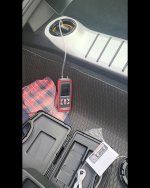
Before that appointment I meet up with the owner and we checked his AOS reading just to see were it was, it was running between 30 to 35 inches of water tested with a manometer.
This is ok because I managed to get a reading from a newly fitted AOS on another Cayman 718, so we knew that his reading was ok.
The first ash reading was taken at 10,700 miles and it was 14.12%.
We took the second reading at 16,506 miles and unbelievably it was at 50.59%.
The ash% had increased by 36.4% over the last 5,800 miles.
While the car was in the workshop I suggested to the owner that he should ask the technician who was showing him the ash reading, did his car have the adaptation function to reset the differential pressure sensor and the GPF.
The technician apparently laughed and said no mate these cars don't have this adaptation.
With that news the owner sold his car shortly after, and we keep in touch often, because he is following our posts with great interest, his car was a Euro 6AP model.
So let's get back to the internal memo that Porsche sent out last year that covered this ash % issue.
The technicians are directed to first look at the fault code P242F (oil ash load to high) if it is present, then look in the GPF data and check the specific soot calculated and measured load, along with the ash calculated and measured load information.
It then explains the 100% fault threshold of the P242F code, and what can cause the ash particals, that form ash, such as additives in the engine oil.
It then goes on to explain that several causes of the high ash load have been found across various vehicles, therefore to prevent repeat issues it is important to check all possible causes of high ash load before proceeding with any repair.
The checks cover a cylinder leakage test, checking inlet and exhaust for signs of oil entering the cylinders, leaks from the AOS, turbocharger and valve stem seals, and even checks on the turbocharger actuator.
The final check was to make sure the GPF differential pressure sensor was checked for correct functionality, ensuring the pipes to the sensor are not blocked or restricted.
The Service history had to be checked to make sure that the correct low Ash oil had been used on all services.
It then went on to say, if no causes can be located, and the above checks are all confirmed as OK, then in some cases the GPF can be recovered by attempting a regeneration to see if the ash load is able to be reset. If it doesn't reset the GPF should be replaced and the vehicle should be retested.
The new GPF's (982254400AF) have been modified to prevent this issue.
The memo even says if there are any issues outside of this model year range or any further questions please submit a PRMS ticket or email directly to the author of the memo.
Quite a few months ago I made several attempts to contact Porsche regarding this internal memo, and at the same time I contacted Porsche Stuttgart to see if they could help me with this issue.
I did this because some of our Dealers were not supporting our owners with this fault, and certainly not getting approval from Porsche to replace these filters, they say will fix this issue.
I was even given a Porsche case number so I could contact Porsche Technical directly, again I made several attempts to contact them, but they have to date not come back to me.
Its a real shame because all I wanted to do was discuss with Porsche Technical why the manufacturer intructions did not include a physical manometer pressure test to show the actual back pressure in the GPF.
So this is my interpretation of this memo.
Under standard warranty rules, if a GPF or DPF filter is physically blocked with ash or soot due to how the vehicle has been driven, or how its been serviced, its classed as a wear and tear issue.
If our Dealers were allowed to carry out a simple back pressure check and they found zero back pressure, which also confirmed the low reading given by the differential pressure sensor, then the wear and tear argument completely collapses.
The failure immediately shifts to a software defect, which Porsche is obligated to cover under warranty.
With all our evidence regarding the ash % coming back on all of our 13 cars that had new modified filters fitted, it confirms 100% that this is not a GPF component issue, its software.
And the fact that adaptations to reset the differential pressure sensor and GPF ash values are not in these DME'S
firmware, once again confirms its definitely software.
And carring out a soot regeneration to try and reset an ash problem is absolutely ridiculous, if ash was physically present in these GPF filters it couldn't be removed by regeneration.
We push on
Dave
We have just hit 190K views on our forum, which is brilliant, just shows the interest in our posts.
The reason I didn't answer 718touring's question regarding build dates, is because we have seen this theoretical ash build up on cars later than 2019.
We have even seen it on two 2019 991 cars, which we have also been involved in, and are still monitoring now, after the new filters have been fitted.
Last year I was contacted by a 2023 Cayman T owner who was worried about his car, we arranged an ash % check at his local Dealer.
Before that appointment I meet up with the owner and we checked his AOS reading just to see were it was, it was running between 30 to 35 inches of water tested with a manometer.
This is ok because I managed to get a reading from a newly fitted AOS on another Cayman 718, so we knew that his reading was ok.
The first ash reading was taken at 10,700 miles and it was 14.12%.
We took the second reading at 16,506 miles and unbelievably it was at 50.59%.
The ash% had increased by 36.4% over the last 5,800 miles.
While the car was in the workshop I suggested to the owner that he should ask the technician who was showing him the ash reading, did his car have the adaptation function to reset the differential pressure sensor and the GPF.
The technician apparently laughed and said no mate these cars don't have this adaptation.
With that news the owner sold his car shortly after, and we keep in touch often, because he is following our posts with great interest, his car was a Euro 6AP model.
So let's get back to the internal memo that Porsche sent out last year that covered this ash % issue.
The technicians are directed to first look at the fault code P242F (oil ash load to high) if it is present, then look in the GPF data and check the specific soot calculated and measured load, along with the ash calculated and measured load information.
It then explains the 100% fault threshold of the P242F code, and what can cause the ash particals, that form ash, such as additives in the engine oil.
It then goes on to explain that several causes of the high ash load have been found across various vehicles, therefore to prevent repeat issues it is important to check all possible causes of high ash load before proceeding with any repair.
The checks cover a cylinder leakage test, checking inlet and exhaust for signs of oil entering the cylinders, leaks from the AOS, turbocharger and valve stem seals, and even checks on the turbocharger actuator.
The final check was to make sure the GPF differential pressure sensor was checked for correct functionality, ensuring the pipes to the sensor are not blocked or restricted.
The Service history had to be checked to make sure that the correct low Ash oil had been used on all services.
It then went on to say, if no causes can be located, and the above checks are all confirmed as OK, then in some cases the GPF can be recovered by attempting a regeneration to see if the ash load is able to be reset. If it doesn't reset the GPF should be replaced and the vehicle should be retested.
The new GPF's (982254400AF) have been modified to prevent this issue.
The memo even says if there are any issues outside of this model year range or any further questions please submit a PRMS ticket or email directly to the author of the memo.
Quite a few months ago I made several attempts to contact Porsche regarding this internal memo, and at the same time I contacted Porsche Stuttgart to see if they could help me with this issue.
I did this because some of our Dealers were not supporting our owners with this fault, and certainly not getting approval from Porsche to replace these filters, they say will fix this issue.
I was even given a Porsche case number so I could contact Porsche Technical directly, again I made several attempts to contact them, but they have to date not come back to me.
Its a real shame because all I wanted to do was discuss with Porsche Technical why the manufacturer intructions did not include a physical manometer pressure test to show the actual back pressure in the GPF.
So this is my interpretation of this memo.
Under standard warranty rules, if a GPF or DPF filter is physically blocked with ash or soot due to how the vehicle has been driven, or how its been serviced, its classed as a wear and tear issue.
If our Dealers were allowed to carry out a simple back pressure check and they found zero back pressure, which also confirmed the low reading given by the differential pressure sensor, then the wear and tear argument completely collapses.
The failure immediately shifts to a software defect, which Porsche is obligated to cover under warranty.
With all our evidence regarding the ash % coming back on all of our 13 cars that had new modified filters fitted, it confirms 100% that this is not a GPF component issue, its software.
And the fact that adaptations to reset the differential pressure sensor and GPF ash values are not in these DME'S
firmware, once again confirms its definitely software.
And carring out a soot regeneration to try and reset an ash problem is absolutely ridiculous, if ash was physically present in these GPF filters it couldn't be removed by regeneration.
We push on
Dave