Menu toggle

Cayman 718 GPF Failure

it’s a 2019 registered October 2029 (2020 model year) and the gpf is the original one.
My car was first registered on 30 September 2019, and after just 16 miles it was already showing an ash/oil load reading of 1.96%. Between January and April this year, that figure increased dramatically from 73.73% to 100%, triggering the Engine Management Light (EML). When I approached the dealer, I was told the issue was not covered under warranty, and I am now involved in lengthy discussions with both the OPC and Porsche GB.
Greenman986S's comments are absolutely spot on. When I purchased what had been a lifelong dream car, I never expected it to turn into a nightmare with the prospect of a £10,000 bill. Porsche's response to what appears to be a manufacturing defect is truly baffling and extremely disappointing.

I hope you are a lucky one that doesn't get affected by this problem, but that in its own right shows the problem is with Porsche that we are relying on luck. My advice if you haven't already is get the GPF fill level checked.

Kind Regards
tony
What was the mileage at 73% and at 100%
 
What was the mileage at 73% and at 100%
At 73.73%, the mileage was 38,725 miles, and at 100% it was 39,712 miles. This is a relatively low mileage increase, largely because the OPC had possession of the vehicle for 24 days due to a headlight issue, the figure increased from 73.73% to 82.75% while the car was with the dealer. At the time, I was completely unaware of this change, as the Engine Management Light (EML) had not yet illuminated.
 
Last edited:
It would be extremely helpful if those owners of 718 4 cylinder cars who have not seen the Engine Control Fault warning and believe that their cars do not exhibit the fault could report the data for their measured soot and oil ash percentage values and the mileage that their cars have covered? Without the data, I would respectfully suggest that you may have your head in the sand, without the evidence to support your claim?

The iCarsoft diagnostic tool is favoured by many owners to provide access to all this data, plus the means of carrying out numerous routine servicing resets. We purchased an iCarsoft POR V2.0 from iCarsoft UK and the current price is about £140 (we have no connection with iCarsoft, other than being a satisfied customer.). The tool is very easy to use.
Our 2021 car has now covered 45K miles and for the last 30K miles, the oil ash load has hovered between 90 and 100%, with absolutely no ill effects. The warning light has been on and off at least 6 times and we juggle the MOT to coincide with when the light is off!

If your car has covered a reasonable mileage (in the order of 25-30K miles) and has low measured soot and oil ash load values, then this may provide an important clue to resolving the fault, if we can determine what is different about your car?
I did ask Dave the opposite of this. what are the actual build dates (not registration dates) of the cars affected how many affected, mileage, manual or pdk.

He didn’t want to disclose that info.

To date I’ve had no issues with my car and I don’t feel the need to check for issues that apparently are not there.

I just drive them and deal with it if it occurs, I’m certainly not going to worry about it.
The good thing is if you ever do need help and information on this defect then its all listed on this thread thanks to the work of Dave and others :)
Fingers crossed you never need it.
 
Over the years, David has collected a considerable amount of information and evidence concerning the Engine Control Fault warning, that appears on the multi-function display on many 4 cylinder 718 cars and a number of other models as well. Whilst the fault code is P242F - ash load too high - this is where the misdiagnosis and the misunderstanding of the fault arises.
There is NO evidence that any of the GPF units are blocked with ash. Indeed, the cars with continue to perform entirely normally. There is no evidence to suggest that there is ANY problem with the GPF. All the evidence suggests that the fault warning is a consequence of an error in the algorithm in the ECU programme, producing erroneous data. Unfortunately, Porsche are refusing to even discuss the evidence that David has gathered, let alone endeavour to correct the fault in the programme.

The practical consequences of the Engine Control Fault warning light is that this would result in an MOT failure.

To date, we have been unable to find a means of adaptation or permanently deleting the fault using proprietary diagnostic testing equipment.

There is no evidence to suggest that any 718 4 cylinder cars fitted with a GPF are immune from the Engine Control Fault warning for non-existent high ash load. A case of not if, but when.

In the meantime, please support David in his battle to persuade Porsche to investigate and correct the manufacturing fault with their cars.
Thank you Sharon.
So to be clear, this is an ECU fault (rather than a sensor) that cannot be rectified independently, as things stand? And notwithstanding the data for faults on cars around 2019/2020, all 718's til production stopped (excluding the 4.0's) are at risk?
 
Tim,
Yes, all the evidence would indicate a programming issue with the ECU. And currently we have no means of permanently carrying out an adaptation. The fault can be temporarily deleted using various proprietary diagnostic tools (which is handy to know if your MOT is pending), but the high oil ash load value reappears within about 300 miles.

Similar differential pressure sensors are fitted to many VW Group vehicles and are notoriously unreliable. However, there is no evidence to suggest that they have any bearing on the fault. We changed ours, just in case, and it made no difference.
Be warned that the differential pressure sensor is a pig to change on a Boxster. It is totally hidden behind the bulkhead, in front of the intercooler. It can just about be reached, with the fingertips, but not seen, with the front engine cover removed.
 
If you're looking at build dates for data then you'd be better looking at the VIN. I have suspected for quite some time that there may be a batch of ECUs that have incorrect coding on the ECU. If Dave can collate the earliest VIN to the latest VIN with this issue if may give those with VINs in between a bit of a heads-up.

Dan
 
Tim,
Yes, all the evidence would indicate a programming issue with the ECU. And currently we have no means of permanently carrying out an adaptation. The fault can be temporarily deleted using various proprietary diagnostic tools (which is handy to know if your MOT is pending), but the high oil ash load value reappears within about 300 miles.

Similar differential pressure sensors are fitted to many VW Group vehicles and are notoriously unreliable. However, there is no evidence to suggest that they have any bearing on the fault. We changed ours, just in case, and it made no difference.
Be warned that the differential pressure sensor is a pig to change on a Boxster. It is totally hidden behind the bulkhead, in front of the intercooler. It can just about be reached, with the fingertips, but not seen, with the front engine cover removed.
Thanks again Sharon! That's really helpful
 
I suspect the reluctance is many fold, maybe such an action will fully isolate the work done here as Porsche bolt its doors tight.
secondly, the cars will be tarred by the same brush, much like IMS bearings etc for 986.
Bore scores on 997 and so on.
Porsche have dropped mistakes in the last decades, but not all models have the issues.

The idea of a batch of ecu having bad software is interesting, but wouldn’t Porsche offer this as a solution compared to the filter change?

This excellent thread shows clearly Porsche have no interest of fixing this problem and I think that because they have no solution themselves!
Their attitude is weak and an insult, an attitude maybe felt with other Porsche products?

worse of all there is no fix anywhere. (Is there, yet?)
 
Morning all,

We have just hit 190K views on our forum, which is brilliant, just shows the interest in our posts.

The reason I didn't answer 718touring's question regarding build dates, is because we have seen this theoretical ash build up on cars later than 2019.

We have even seen it on two 2019 991 cars, which we have also been involved in, and are still monitoring now, after the new filters have been fitted.

Last year I was contacted by a 2023 Cayman T owner who was worried about his car, we arranged an ash % check at his local Dealer.

Before that appointment I meet up with the owner and we checked his AOS reading just to see were it was, it was running between 30 to 35 inches of water tested with a manometer.

This is ok because I managed to get a reading from a newly fitted AOS on another Cayman 718, so we knew that his reading was ok.

The first ash reading was taken at 10,700 miles and it was 14.12%.

We took the second reading at 16,506 miles and unbelievably it was at 50.59%.

The ash% had increased by 36.4% over the last 5,800 miles.

While the car was in the workshop I suggested to the owner that he should ask the technician who was showing him the ash reading, did his car have the adaptation function to reset the differential pressure sensor and the GPF.

The technician apparently laughed and said no mate these cars don't have this adaptation.

With that news the owner sold his car shortly after, and we keep in touch often, because he is following our posts with great interest, his car was a Euro 6AP model.

So let's get back to the internal memo that Porsche sent out last year that covered this ash % issue.

The technicians are directed to first look at the fault code P242F (oil ash load to high) if it is present, then look in the GPF data and check the specific soot calculated and measured load, along with the ash calculated and measured load information.

It then explains the 100% fault threshold of the P242F code, and what can cause the ash particals, that form ash, such as additives in the engine oil.

It then goes on to explain that several causes of the high ash load have been found across various vehicles, therefore to prevent repeat issues it is important to check all possible causes of high ash load before proceeding with any repair.

The checks cover a cylinder leakage test, checking inlet and exhaust for signs of oil entering the cylinders, leaks from the AOS, turbocharger and valve stem seals, and even checks on the turbocharger actuator.

The final check was to make sure the GPF differential pressure sensor was checked for correct functionality, ensuring the pipes to the sensor are not blocked or restricted.

The Service history had to be checked to make sure that the correct low Ash oil had been used on all services.

It then went on to say, if no causes can be located, and the above checks are all confirmed as OK, then in some cases the GPF can be recovered by attempting a regeneration to see if the ash load is able to be reset. If it doesn't reset the GPF should be replaced and the vehicle should be retested.

The new GPF's (982254400AF) have been modified to prevent this issue.

The memo even says if there are any issues outside of this model year range or any further questions please submit a PRMS ticket or email directly to the author of the memo.

Quite a few months ago I made several attempts to contact Porsche regarding this internal memo, and at the same time I contacted Porsche Stuttgart to see if they could help me with this issue.

I did this because some of our Dealers were not supporting our owners with this fault, and certainly not getting approval from Porsche to replace these filters, they say will fix this issue.

I was even given a Porsche case number so I could contact Porsche Technical directly, again I made several attempts to contact them, but they have to date not come back to me.

Its a real shame because all I wanted to do was discuss with Porsche Technical why the manufacturer intructions did not include a physical manometer pressure test to show the actual back pressure in the GPF.

So this is my interpretation of this memo.

Under standard warranty rules, if a GPF or DPF filter is physically blocked with ash or soot due to how the vehicle has been driven, or how its been serviced, its classed as a wear and tear issue.

If our Dealers were allowed to carry out a simple back pressure check and they found zero back pressure, which also confirmed the low reading given by the differential pressure sensor, then the wear and tear argument completely collapses.

The failure immediately shifts to a software defect, which Porsche is obligated to cover under warranty.

With all our evidence regarding the ash % coming back on all of our 13 cars that had new modified filters fitted, it confirms 100% that this is not a GPF component issue, its software.

And the fact that adaptations to reset the differential pressure sensor and GPF ash values are not in these DME'S
firmware, once again confirms its definitely software.

And carring out a soot regeneration to try and reset an ash problem is absolutely ridiculous, if ash was physically present in these GPF filters it couldn't be removed by regeneration.

We push on

Dave
 
Hi Guys & Girls

Just another reminder when your EML light comes on with a warning message saying.

Engine Control fault Consult dealer Driving permitted, if they find the DTC code P242F present, please don't put yourself under any pressure.

BECAUSE THERE ISN'T ANY.

You may be told that your particulate filter bank 1 oil ash measured reading K231 is at 100% which put the light on.

And you may be told you need a new GPF filter.

YOU DON'T

If you can convince your Dealer or garage to check the GPF for back pressure, they definitely will not find any that would support a blocked GPF filter either with soot or Ash.

Talking about soot, you will always definitely not find any soot present when your GPF is showing a reading of 100% ash.

You can then ask the Dealer to show you the internal Porsche memo they have, that explains what to do when the DTC P242F is present on your car.

If you could get sight of this memo, you will see that it gives clear instructions to carry out a soot regeneration to try and reset your ash % reading.

It also gives information on items to be checked before the attempted regeneration is carried out, that could contribute to the ash buildup in the GPF.

THESE EXTENSIVE CHECKS WOULD NOT BE REQUIRED IF THE BACK PRESSURE CHECK WAS CARRIED OUT FIRST.

It goes on to say if the regeneration doesn't reset your ash % reading, then the next step is to replace your supposedly blocked GPF filter with a modified filter that was brought out to fix this very same issue.

Which is confirmed in the memo, its in the last paragraph at the bottom of the page.

Sounds very simply, but in practice its very difficult for some reason.

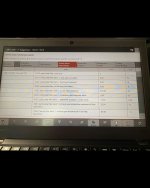
Below are two photos from the same car taken recently, one showing a GPF report from a Porsche PWIS diagnostic tester showing the 100% oil ash measured value K231, and it also shows no soot present.

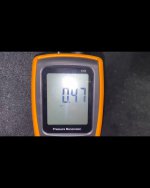
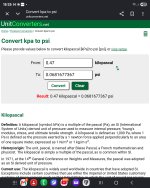
And the other photo shows the actual back pressure reading taken at the same time from the GPF supple pipe to the differential pressure sensor.

NO PRESSURE AT ALL

I know people will say Iam repeating myself again, but if anybody now with this problem comes on to this forum for help. They will have an updated plan of what to do going forward, which is based on over three years of research into this problem.

Dave
 

Attachments

  • Screenshot_20260729_165958_Gallery.jpg
    Screenshot_20260729_165958_Gallery.jpg
    1.2 MB · Views: 7
  • Screenshot_20260729_170042_Gallery.jpg
    Screenshot_20260729_170042_Gallery.jpg
    692.7 KB · Views: 7
Does the new filter design work?
That is the owner can drive off into the distance free of any worry this will return?

Is there proof the new ‘2019’ replacement filter has failed ( light on) before reasonable miles covered, say 60k miles?
Or, does it fail much the same time/ miles of the car’s original?

Have any 2020 or younger cars failed with a dash light on?
Finally, if the car goes into an MoT and the light is present the car fails. What does the owner do?
 
Hi 911Hillclimber

We are monitoring quite a few of these cars with the new modified GPF's fitted.

All the cars have ash readings that are not acceptable for the mileages covered.

Our highest reading at the moment is 79% over 5 thousand miles, we have another one that had over 60% of ash when the owner picked it up from just having the new filter fitted.

They insisted the Dealer gave them the GPF readings before they left the garage, we have proof of this on record.

The others are generally over 50 %, and let's not forget Paul's car, and all the parts that were fitted trying to reduce his ash reading, that was I believe around 50%.

These cars are filling up with Ash, (that isn't there) alot quicker than from new.

Because the adaptation function to zero the differential pressure sensor and the GPF values are not there, the algorithm software is totally confused.

This is what must have happened to the cars in the first year of production, for them to bring out a modified filter with a new part number, and was fitted to December 2019 cars onwards.

Obviously we know that these modified filters were not the cause of this problem.

Any changes to emission control hardware or software by any motor vehicle manufacturer has to be approved by the emission bodies that sanctioned the original cars.

So way back in 2019 these modified GPF filters will have been authorised to be replaced, its just a shame that on all of our cars they don't seem to fix this issue.

We know are original GPF filters have always dealt with the soot because the tailpipes are always light grey in colour.

If you compare them with a 981 tailpipe you can really see the difference these GPF filters make.

We just need the software sorting, thats all.

Regarding the Mot, all they need to do is drive the car, and the light will go out eventually, then when its out, take it in for the mot test.

Remember there is very little ash in these cars even after all this time, its all make believe.

There is absolutely no reason to sell these cars because of this fault, we just need to get Porsche to introduce a back pressure check, and then they can sort out the real problem.

Dave
 

Posts made and opinions expressed are those of the individual forum members

Use of the Forum is subject to the Terms and Conditions

Disclaimer

The opinions expressed on this site are not necessarily those of the Club, who shall have no liability in respect of them or the accuracy of the content. The Club assumes no responsibility for any effects arising from errors or omissions.

Porsche Club Great Britain gives no warranties, guarantees or assurances and makes no representations or recommendations regarding any goods or services advertised on this site. It is the responsibility of visitors to satisfy themselves that goods and/or services supplied by any advertiser are bona fide and in no instance can the Porsche Club Great Britain be held responsible.

When responding to advertisements please ensure that you satisfy yourself of any applicable call charges on numbers not prefixed by usual "landline" STD Codes. Information can be obtained from the operator or the white pages. Before giving out ANY information regarding cars, or any other items for sale, please satisfy yourself that any potential purchaser is bona fide.

Directors of the Board of Porsche Club GB, Club Office Staff, Register Secretaries and Regional Organisers are often requested by Club members to provide information on matters connected with their cars and other matters referred to in the Club Rules. Such information, advice and assistance provided by such persons is given in good faith and is based on the personal experience and knowledge of the individual concerned.

Neither Porsche Club GB, nor any of the aforementioned, shall be under any liability in respect of any such information, advice or assistance given to members. Members are advised to consult qualified specialists for information, advice and assistance on matters connected with their cars at all times.

Back
Top