Menu toggle

Cayman 718 GPF Failure

Hi Guys & Girls

Without prejudice

Ive just come off the phone with another owner with a GPF problem and the Dealer wants to charge him over 9K to fit a new filter.

I want to show you this information regarding a vehicle we had, that had its GPF cleaned with a detergent that temporarily restricted his GPF.

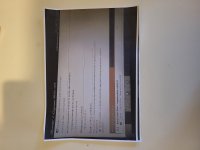
It left a DTC code of P2463 (soot load to high) and another code 26740 Particulate filter Regeneration needed.

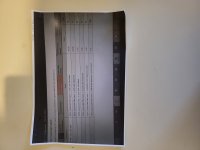
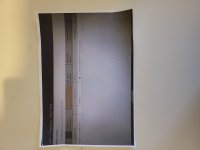
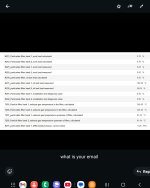
When you look at the soot measured and calculated data you see 40.00% and 52.55%.

Now look at the differential pressure reading K251 its only at .75 hPa.

This just shows us how these cars are operating and it doesn't make any sense.

Remember the differential pressure sensors job is to monitor soot values, and when the soot level gets high enough it puts the above light on.

You would expect soot values of 40 to 52% would normally show a sensor pressure reading alot higher than .75 hPa.

No wonder we never see this soot warning light coming on.

If you doubled the soot values, you would only have a reading around 1.50 hPa,(not alot).

Maybe the sensor is faulty, who knows, but is this another example of how this emission system control is struggling to make any sense all.

With regards to the suggestion that we take this to the press, I have always wanted to give the manufacturer enough time to prove to us that these modified filters would sort out this issue.

It takes time to get to a position were all the testing has been carried out, and you have the confidence to present all the evidence to the manufacturer to support our claims that these cars are not right.

We are now at a point after seeing all the parts that have been fitted to all these cars, all time and money spent by the manufacturer to try and fix this issue, to understand and confirm that this is clearly is a manufacturing defect.

We have an email from one of our owners that had a modified GPF filter fitted last year, from Porsche Customer Care, stating that this GPF issue with the DTC P242F was indeed a Manufacturing defect, we have the case number to support this.

Sadly because the oil ash came back, they sold the car.

We will be asking somebody soon to ask these questions we have been asking for quite some time.

Dave
 

Attachments

  • 20251115_141951.jpg
    20251115_141951.jpg
    3.3 MB · Views: 5
  • 20251115_142018.jpg
    20251115_142018.jpg
    3.7 MB · Views: 5
  • 20251115_142031.jpg
    20251115_142031.jpg
    3.5 MB · Views: 5
  • 20251115_142047.jpg
    20251115_142047.jpg
    3.8 MB · Views: 5
Morning Guys & Girls

Without prejudice

Unfortunately we are still waiting for the Dealers who are dealing with our two cars, that they say need new modified GPF filters fitting at cost of 9K to come back to us.

And to make matters worse we have had another owner contact us over the weekend.

So to sum up, we are in a situation were the Dealers and Porsche have been paying for all the work thats been carried out on all the cars that have had these new modified filters fitted, 13 in total so far that we know about.

In all these cases we have stopped them charging our owners, for replacing these filters, because the GPF readings made no sense at all, and they all had the same issue.

To make this situation even worse they have carried out further work on these car's covered by Porsche, trying to find the real cause of this fault, but to no avail.

It includes two seperate engines removed, stripped completely down looking for internal oil consumption evidence, (none found), new Turbos, AOS, DME, and finally a Brand new engine was fitted which didn't affect the oil ash % reading.

We had a vehicle way back in May 2024 that required a new GPF filter at a cost of £9,172.00, we challenged the dealer which just happened to be Porsche Reading, and they reversed the desision.

It took over 5 months to to get to this authorised, and we eventually received an email from Porsche Customer Care which surprisingly said they were unaware of an inherent fault with GPF's on their vehicles.

It then went on to say that the fault codes which were present, which was P242F, found durring the investigation, to be that of a manufacturing defect.

We also have in our possession, given to us by the owner the full diagnostic Val report which shows the DTC P242F present.

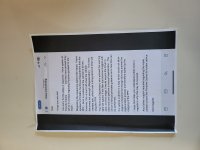
Enclose 2 photos of information showing the first response email, and part of the second response email from Porsche Customer Care.

Also I found this interesting information on Google below

A motor vehicle manufacturing defect is a failure due to the design or construction of a vehicle, or its parts, that is common to a number of vehicles and likely to affect safe operation and pose a significant risk to occupants or others. It can be a physical component or software issue and may involve sudden, catastrophic failure with little warning. Examples include faulty brakes, steering, or airbag systems.

Key characteristics

Origin: The fault stems from the initial design or manufacturing process, not from normal wear and tear, improper maintenance, or driver error.

Safety-related: It has the potential to affect the vehicle's safe operation and poses a significant risk, such as affecting control or stability.
Common to a number of vehicles: The defect is not an isolated incident but a problem that could exist in multiple vehicles of the same model.

Potential for sudden failure: It often involves issues that lead to sudden and catastrophic failure, where the driver has little or no warning to take preventative action.

Can be physical or software: The defect can be a physical component (like faulty brakes) or a software issue (like a bad calibration in the motor control unit).

Examples of manufacturing defects
Brakes: Faulty brakes that fail suddenly.
Steering: Mechanical issues with the steering system that affect control.
Airbags: A defect that causes airbags to fail to deploy in an accident or to deploy unexpectedly.

Software/Electronics: Errors in software that can cause vehicle systems to malfunction, such as an incorrect motor control

An emission control issue would be classed as a manufacturing defect only if the problem is determined to be a result of a fault inherent in the design or production of the vehicle at the time of manufacture, rather than from normal wear and tear, misuse, or lack of maintenance.

Here is a breakdown of the determining factors:
Manufacturing Defect: If an investigation concludes the emission problem (e.g., a faulty catalytic converter, a defective oxygen sensor, or incorrect engine software) was caused by a failure in design or construction that existed when it left the factory, it is a manufacturing defect. In such cases, the manufacturer is typically liable, and the repair would likely be covered under warranty or a safety recall, potentially at no charge.

Normal Wear and Tear / Maintenance Issue: Most emission control problems that occur over time are a result of typical usage and expected deterioration of components. Common causes include clogged air filters, old spark plugs, or a loose gas cap, which are considered maintenance issues and not manufacturing defects. These would not be covered as a manufacturing defect and would be the owner's responsibility to fix.

Proof: Under UK consumer rights law, if a fault is discovered within the first six months of purchase, it is presumed to have been present at the time of sale, and the seller/manufacturer must prove otherwise. After six months, the burden of proof shifts to the consumer to demonstrate that the fault was an inherent defect.
Safety/Major Defect: Emission issues can be classified as major defects if they pose a significant risk to the public or cause the vehicle to be unroadworthy (e.g., the engine management light is on, or the emissions are significantly over the legal limit). This can lead to an MOT failure and the need for prompt rectification.
In summary, the classification depends on the root cause of the specific failure, which usually requires a professional diagnosis to determine if it stems from a production fault or a maintenance-related issue.

It looks like somebody read this information or similar information and had to agree that this fault on this car was indeed a manufacturing defect.

With the information provided from the Porsche internal memo sent out in March this year that confirmed the new OPF filter's (982254400AF) have been modified to prevent this issue.
This must surely prove that this is the result of a fault inherent in the design or production of the vehicle at the time of manufacture.

This fault was obviously found in vehicles durring the first year they were sold, because a new modified filter was fitted on vehicles with a production date later than December 2019.

With all this information thats available, I would suggest that if we get anymore reports of this specific fault on these cars we do the following.

Book the car into the nearest Porsche Dealer

Ask them to carry out a DTC check and confirm the code P242F oil ash load to high is present.

Ask to see the GPF data report page 42 of the Val report, this will confirm that no back pressure will be present on the GPF filter when its showing any readings between 90 to 100%.

Then ask the Dealer to submit a claim to Porsche with the heading, Manufacturing Defect, ask them for the case number to confirm Porsche are aware of this issue on your car.

Ask to speak to the Service Managers at the Dealership to make sure they are aware of this complaint, and you have a point of contact.

Dave
 

Attachments

  • 20251117_083858.jpg
    20251117_083858.jpg
    3.4 MB · Views: 5
  • 20251117_083500.jpg
    20251117_083500.jpg
    4 MB · Views: 5
Hi Guys & Girls

Without prejudice

Following on from my last post, and our constant questioning regarding the lack of back pressure found when the oil ash % figure reaches 100%, and the subsequent warning light that comes on, that would fail the Mot test.

It just gets you thinking, there must be something very wrong with the algorithm that affects the sensor reading. We know from Porsche's Patent publication regarding the (Method for determining the loading state of a particulate filter), that this reading goes through a filtering process to provide syn-chronized integrals.

In layman's terms, this is what it means

Synchronized integrals" generally refers to specialized mathematical methods used in numerical analysis and control theory to achieve synchronization in complex or chaotic systems, or for solving certain types of integral equations. They are a theoretical concept with specific, high-level applications rather than an everyday engineering tool.

Well this could explain it all.

Facts are as follows.

1. No credible pressure readings from the differential pressure sensor at 100% full, or indeed on any other measured values we have seen.

2. No credible soot readings, because the sensor values are non existent, which would explain why we never see a soot warning light or message on the dashboard.

Yet we have instructions on what to do if it comes on in the Drivers Handbook?.

3. Its obvious the algorithm is controlling the soot and oil ash % figures, because the pressure sensor is clearly not.

4. The pressure sensor is not picking up the back pressure that should be there if the 100% oil ash is real.

5. It seems that when a regeneration is carried out, soot values can often be seen, why is this.

6. The Dealers are carrying out regenerations on our filters, when there is very little soot present, and there is no pressure in the exhaust.

7. The Dealers refusal to carry out a simple back pressure check on all our faulty cars, clearly confirms they know there is no back pressure in the GPF.

8. The existence of the internal memo sent to the Dealers in March this year, confirms they had this same issue, of not being able to re set the oil ash % figure then. And they even had the GPF modified to try and correct this fault.The modified filter was fitted to post December 2019 vehicles.

9. After the many cars that have had a new modified filter fitted, why are they in a position were they still cannot re set this oil ash % value, without having to do a regeneration on a new filter.

10. Why is the adaptation facility to reset the differential pressure sensor and the oil ash % values not on these cars

11. Why are they now telling us on the cars that have had modified filters fitted that an oil ash % reading over 50%, is acceptable and no further work will be carried out on these cars and the technical ticket requests will be cancelled.

12. And finally why are Dealers still trying to charge their own customers to fit a GPF filter that will not fix these cars.

I know I keep going on, but the more you look at the current situation we have on these Cars, the more Ridiculous it is.

All we need is Porsche to stop this silliness and look after their customers like they should do.

Dave
 
My speculation, but it does seem as if Porsche is pushing back a bit on this as it is getting difficult to obtain reports from OPC's, who appear to be digging in and saying that the way to get your CEL to go out is to replace the GPF. They don't seem to want to explore any other diagnosis. So, £9,000 please sir. If you don't want us to fix it, please take your car away.

If a customer does get a new GPF, then the light usually goes out. We don't know what else they may do at the same time but we do know that the process has been unsuccessful in two cases where a full strip down has not solved the issue. As Dave states, everything points to a software issue and an inability to re-set the values, hence the replacement of the GPF still involves one or more attempts at regeneration. Of the cars that have been fixed, most are quickly showing ash values of 50% or more, which Porsche now states is quite acceptable as long as the car is running fine, without a warning light on. This is the problem with going to the press at this point. Porsche says there is no issue other than the fix being a replacement service item at £9k. Despite all we have learned at this stage, we have little factual basis for countering that view. It is their stated opinion versus ours. Many owners of these cars will be driving around blissfully unaware that they have a potential problem. The normal MOT emissions test will not show up any faults (other than you won't get a pass with a CEL on).

As stated above, it does seem as if we are getting to crunch time on this matter. Some things need to happen which would give us more traction. It would help our cause if:
- a car that has had a new GPF has the CEL come back on
- the DVSA takes an interest on the basis of a potenntial emissions fault
- an OPC refuses to divulge the VAL report results or to do any investigation other than read the code off the PIWIS
- other models start to have similar issues
- we are able to identify a different fix by engaging and independent to follow this through.

We also have a case that the cost of repair is unreasonable. Who buys a car of this value where there is a service item costing £9k. We are into McLaren, Ferrari and Bugatti teritory. Posche reworded their extended warranty terms to specifically exclude the GP Filter This in itself suggests they don't think these are a few isolated instances.

We might also have an argument about not allowing fair competition. Porsche independent specialists can only try a forced regeneration to fix the problem, and it does not work medium term. They ultimately have to refer back to an OPC who will charge £9k. Porsche have been rightly criticised for not permitting others to repair PDK gearboxes, differentials or other major components and not selling spare parts. This would be the first time they have applied that approach to a service item.

We are some way towards getting what we need re the above matters. We need to be careful to obtain as much written support as possible. We are also trying to form a group of owners out of the open cases that Dave has got, to work together, compare notes and build a compelling argument about the unfair and unreasonable treatment they are receiving.

At this point, with all Dave has done over 2 1/2 years, we will have leverage and get some legal advice.

Any thoughts and contributions are welcomed!!

 
Apologies if this has already been covered. The Google response to my question regarding finance company liability suggests that finance companies are equally liable along with the dealer…has anyone tried ?

On a different note this problem has certainly put me off upgrading my pre dpf 981. I have maintained the Porsche warranty throughout, but the thought of a £9k bill is enough to make me hang on to my current car. It’s very short sighted of Porsche. The actual cost of the dpf to Porsche must be far less…so they seem to be charging for the new DPF at full dealer margins for what is a contentious replacement.
 
Hi Voodoo_Blue

Without prejudice

Regarding other models, we have had issues with the 718 Boxster 2.0 and 2.5, and model years up to and including 2023.

We also had a similar issue with a December 2018 991 GTS recently.

We managed to convince the Porsche Dealer that quoted the owner to replace the Bank 1 GPF filter to cover the cost under warranty.

Again we used the data from the GPF report which showed several readings that didn't look right.

We had a 100% oil ash reading on bank 1, and 58 % on bank 2.
The Dealer authorised bank 1, but refused to do bank 2.

The reason why we asked them for help was the readings didn't look right.

1. The soot loading didn't look right, all the same, impossible

2. The exhaust temperatures again all the same, how could bank 1 temperatures be the same as 2 when the GPF is supposedly blocked.
But they are all CALCULATED afterall.

3. Our favourite sensor, a reading of -0.25 hPa, in my experience that could well be a faulty sensor.

Enclose the GPF report below for your attention.

In my opinion this GPF report looks like it maybe controlled by the same algorithm controlling our 718 cars, because again it makes no sense at all.

Any feedback on this post would be appreciated

Dave
 

Attachments

  • Screenshot_20251120_204513_Gallery.jpg
    Screenshot_20251120_204513_Gallery.jpg
    534.6 KB · Views: 5
Hi Voodoo_Blue

Without prejudice

Following on from my last post, I would like to share some more information regarding our Oil Ash loading issue.

Vehicle control systems monitor the minimum pressure drop achieved after a full regeneration event. This value is used in algorithms (soot models) to determine the ash volume and adjust soot accumulation estimates and regeneration frequency, preventing premature or excessive regeneration due to ash-induced backpressure. A higher post-regeneration pressure drop indicates a higher ash load.

So if our filters had physical ash present in a percentage form, you would expect to see more soot regeneration requests on your dashboard. Instructing you to carry out road testing with lots of deacceleration involved as instructed in your drivers manual.

This is because the GPF filter would be getting full of ash, and the room for soot would be reducing so more soot regenerations would be needed.

So why are we not getting these soot regeneration messages, which leave a DTC code, before the Ash % gets to 100%

We have never, ever had a soot regeneration message on any of the faulty cars we have dealt with, which is unbelievable, when supposedly the GPF is blocked with ASH, and the GPF needs replacing.

Again the differential pressure sensor doesn't know the difference between soot or ash, it just works on pressure and this information is fed into the algorithm, and the algorithm does the rest.

So the only way to affect this Ash %, (thats never present in these filters), is to carry out a regeneration, which is designed for soot control only, yet according to our cars data no soot is present and no pressure is seen.

This Patents method for determining the loading state of a particulate filter of a motor vehicle is well documented, but it doesn't cover the maintenance or any means to adapt any of the measured or calculated data shown on our GPF reports.

And the fact that on our cars the adaptation facility to reset the differential pressure sensor and GPF doesn't seem to be available, makes this situation worse.

We will be checking other vehicles that are displaying abnormal oil ash % readings to see if they have the adaptation capability going forward.

Had a call from an owner two weeks ago that had his car into a Dealer recently with a supposedly blocked filter, the Dealer quoted £9k to replace the filter.

We asked for a back pressure check to be carried out, and what would it cost, and he was told £1,500.00 to remove the exhaust and carry out checks, but it could be more.

This is going to stop, and these Dealers who are blatantly exploiting this situation will not be forgotten, we have a detailed database covering all the people caught up in this situation, and its still growing after 2.5 years.

Sorry to repeat myself, but if anybody comes on to our forum looking for answers, if they have this issue, they will read 2.5 years worth of research covered in several recent posts.

Dave
 
Good post, and exactly my understanding.

My one additional question is why did the factory redesign the filter in 2018 ish and issue it to series production obviously thinking it fixed this problem which it does not?
The might of Porsche Engineering must have looked far deeper than just a fancy tin can unless they were convinced the driver attitude, service oils used etc were really to blame.
My 2014 Skoda Superb oil burner did 4 re-gens of it's own volition to sort the filter 'condition' in the 10 years I had it (from new). The engine would keep on running with the car locked, fans running for about 10 mins.
When I asked my Skoda dealer what was happening, she said "they all do that when the filter needs to be cleaned, it is normal, it is designed that way".
Passed 7 MoT's so proved she was right.
All part of the same VAG......so why is it so hard for Porsche to understand and fix this issue, the knowledge it in the Group.
 
Last edited:
Hi Voodoo_Blue

If its ok I will put the whole Patent information out on the forum on Monday, you will see that it all starts with the sensor but then gets far more complicated.
This information is an invention thats been created to cover the loading of the particulate filter and its process.

Hi 911 Hillclimber
 
Hi 911 Hillclimber,

Sorry clicked on the post button to soon

My understanding is Porsche wanted to go their own way regarding software, the fact that the soot regeneration warning light doesn't seem to work correctly says it all.

A question I would ask to any body driving a Porsche GPF vehicle, from 2019 to present day, have they ever seen this soot regeneration light and message come up on their dashboards.

Dave
 
I don’t myself own a 4.0L car but seem to recall that a high initial oil consumption has been mentioned in quite a few posts on the Cayman and Boxster forums. Hopefully those with first-hand experience will confirm.

Jeff
 
I can confirm the 4.0 do like a drink especially in the initial break-in phase however I've also found that they do need a top up when driving spiritedly and the il temps are high. Whether this has something to do with the engines burning oil I've no idea but it's going somewhere. Oil type must have an effect on highly stung engines otherwise Mobil wouldn't produce a GT specific oil with a low carbon content presimably to reduce the soot/ash by-product when burnt.

Dan
 
I don’t myself own a 4.0L car but seem to recall that a high initial oil consumption has been mentioned in quite a few posts on the Cayman and Boxster forums. Hopefully those with first-hand experience will confirm.

Jeff
I'm just starting on the running in journey but the handbook does specifically mention higher oil and fuel consumption during the running in period. But so did my first car in 1969, and that wasn't a Porsche!
 
Morning AlistairF


Regarding your question regarding finance companies, Iam currently helping two of our owners with faulty cars.

Sadly we are still trying to get them to help us, but we are struggling, they don't seem to believe us that these cars were faulty before these owners took delivery.

We have sent lots of evidence to support our claims, but they are ignoring us.
And has usual the suppling garages don't care either, these owners have been completed abandoned.

We have spent well over 8 months on this issue.

So the supplier of the car, the Dealers, the finance company, and the manufacturer of these cars don't care.

Just imagine if you were in these people's shoes, and sadly this was the first Porsche experience for these guys.

And its not their fault, this is 100% down to the manufacturer of these cars, and they should care.

Dave
 
Hi Guys & Girls

Without prejudice

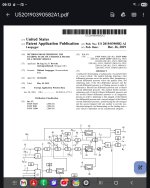
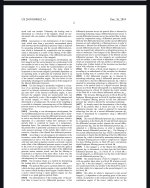
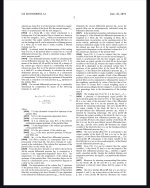
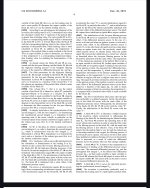
I would like to share with you the Patent information I found on the internet concerning the loading of a particulate filter on Porsche GPF cars.

It takes time to read through this info, your feedback would be greatly appreciated.
Dave
 

Attachments

  • Screenshot_20251010_091217_Drive.jpg
    Screenshot_20251010_091217_Drive.jpg
    805.2 KB · Views: 11
  • Screenshot_20251010_091245_Drive.jpg
    Screenshot_20251010_091245_Drive.jpg
    1.4 MB · Views: 12
  • Screenshot_20251010_091256_Drive.jpg
    Screenshot_20251010_091256_Drive.jpg
    1.5 MB · Views: 10
  • Screenshot_20251010_091304_Drive.jpg
    Screenshot_20251010_091304_Drive.jpg
    1.3 MB · Views: 8
  • Screenshot_20251010_091311_Drive.jpg
    Screenshot_20251010_091311_Drive.jpg
    1.5 MB · Views: 8
  • Screenshot_20251010_091319_Drive.jpg
    Screenshot_20251010_091319_Drive.jpg
    1.3 MB · Views: 8
  • Screenshot_20251010_091332_Drive.jpg
    Screenshot_20251010_091332_Drive.jpg
    114.7 KB · Views: 11
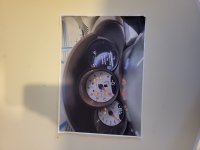
Hi, me again

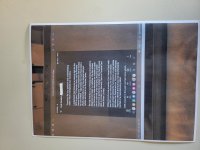
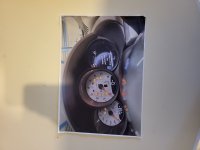
Forgot to send you this photo of the rare soot regeneration message we have never seen on any of the faulty cars we have dealt with so far.

Dave
 

Attachments

  • 20251115_141951.jpg
    20251115_141951.jpg
    3.3 MB · Views: 13

Posts made and opinions expressed are those of the individual forum members

Use of the Forum is subject to the Terms and Conditions

Disclaimer

The opinions expressed on this site are not necessarily those of the Club, who shall have no liability in respect of them or the accuracy of the content. The Club assumes no responsibility for any effects arising from errors or omissions.

Porsche Club Great Britain gives no warranties, guarantees or assurances and makes no representations or recommendations regarding any goods or services advertised on this site. It is the responsibility of visitors to satisfy themselves that goods and/or services supplied by any advertiser are bona fide and in no instance can the Porsche Club Great Britain be held responsible.

When responding to advertisements please ensure that you satisfy yourself of any applicable call charges on numbers not prefixed by usual "landline" STD Codes. Information can be obtained from the operator or the white pages. Before giving out ANY information regarding cars, or any other items for sale, please satisfy yourself that any potential purchaser is bona fide.

Directors of the Board of Porsche Club GB, Club Office Staff, Register Secretaries and Regional Organisers are often requested by Club members to provide information on matters connected with their cars and other matters referred to in the Club Rules. Such information, advice and assistance provided by such persons is given in good faith and is based on the personal experience and knowledge of the individual concerned.

Neither Porsche Club GB, nor any of the aforementioned, shall be under any liability in respect of any such information, advice or assistance given to members. Members are advised to consult qualified specialists for information, advice and assistance on matters connected with their cars at all times.

Back
Top