Morning Guys & Girls
Without Prejudice
Continuing on with our push to get the OIL ASH % fault on our 718 cars resolved, can I share this information with you.
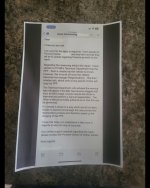
I Googled this search text question this morning.
Would a measured oil ash load that was incorrect be classed as an emission defect. Bearing in mind that the differential pressure sensor reading was very low, and a replacement GPF filter did not fix the issue.
This is what came back.
Yes, an incorrect, high measured oil ash load on a Gasoline Particulate Filter (GPF) would be considered an emission control defect, especially since a new GPF and low differential pressure sensor readings didn't resolve the issue, indicating a potential fault in the system's measurement or management of the ash level, rather than a physical blockage.
Understanding the Readings
- High Measured Ash Load:
This indicates the system believes there is a significant accumulation of ash in the GPF, which is a major concern for emission control, as it can lead to reduced performance and increased emissions.
- Low Differential Pressure:
A low differential pressure reading (the difference in pressure before and after the GPF) suggests the exhaust system is not significantly blocked. This contradicts a high ash load, which would normally create high back pressure.
- Measurement Malfunction:
The discrepancy between a high ash load reading and low pressure suggests that the measurement of the ash load itself is incorrect, rather than a real physical problem with the GPF's ability to hold ash.
- Faulty Sensor or Calculation:
The issue could stem from the differential pressure sensor itself, the software or algorithm that calculates ash load, or other related components within the GPF management system.
- Emission Control:
The primary purpose of the GPF is to control harmful particulate emissions. If the system's internal measurement of ash load is faulty, it can trigger unnecessary interventions (like forced regenerations) or lead to incorrect diagnoses, ultimately impairing its ability to function as a proper emission control device. - Component Failure:
Even if the physical GPF is not the problem (as shown by the replacement not fixing it), the failure of the sensor or the system's ability to accurately measure ash load is a failure of the emission control system.
- Well that certainly covers what we have been saying for a long time, even GOOGLE understands the issue.
- We are at 87 thousand views at the moment, thankyou all for your time looking at what's going on, its appreciated.
- Dave