Menu toggle

Cayman 718 GPF Failure

Morning Guys & Girls

Without Prejudice

Continuing on with our push to get the OIL ASH % fault on our 718 cars resolved, can I share this information with you.

I Googled this search text question this morning.

Would a measured oil ash load that was incorrect be classed as an emission defect. Bearing in mind that the differential pressure sensor reading was very low, and a replacement GPF filter did not fix the issue.

This is what came back.

Yes, an incorrect, high measured oil ash load on a Gasoline Particulate Filter (GPF) would be considered an emission control defect, especially since a new GPF and low differential pressure sensor readings didn't resolve the issue, indicating a potential fault in the system's measurement or management of the ash level, rather than a physical blockage.


Understanding the Readings
  • High Measured Ash Load:
    This indicates the system believes there is a significant accumulation of ash in the GPF, which is a major concern for emission control, as it can lead to reduced performance and increased emissions.

  • Low Differential Pressure:
    A low differential pressure reading (the difference in pressure before and after the GPF) suggests the exhaust system is not significantly blocked. This contradicts a high ash load, which would normally create high back pressure.
What the Discrepancy Suggests
  • Measurement Malfunction:
    The discrepancy between a high ash load reading and low pressure suggests that the measurement of the ash load itself is incorrect, rather than a real physical problem with the GPF's ability to hold ash.

  • Faulty Sensor or Calculation:
    The issue could stem from the differential pressure sensor itself, the software or algorithm that calculates ash load, or other related components within the GPF management system.
Why It's a Defect

  • Emission Control:
    The primary purpose of the GPF is to control harmful particulate emissions. If the system's internal measurement of ash load is faulty, it can trigger unnecessary interventions (like forced regenerations) or lead to incorrect diagnoses, ultimately impairing its ability to function as a proper emission control device.
  • Component Failure:
    Even if the physical GPF is not the problem (as shown by the replacement not fixing it), the failure of the sensor or the system's ability to accurately measure ash load is a failure of the emission control system.

  • Well that certainly covers what we have been saying for a long time, even GOOGLE understands the issue.

  • We are at 87 thousand views at the moment, thankyou all for your time looking at what's going on, its appreciated.

  • Dave


Whilst this is just speculation on my part, I am convinced that Porsche know what the problem is and how to fix it. ........One approach to this, which would result in what have experienced so far, is to say nothing and deal with each case on a one by one basis.

Might this also explain why the Club Leadership appear not to have shown any interest in trying to get Porsche to take notice ? Isn't this exactly the type of issue where the Club should be at the forefront ...
 
Hi Guys & Girls

Without Prejudice

Following on from my last post regarding the possible software issue on our cars, I would like to show you some more confusing information regarding the soot and ash control on our cars.

We have said this before, that none of our owners, that have had this oil ash % issue have ever seen a soot regeneration message on their dashboards.

You would expect that a GPF filter that was filling up with Ash would accumulate soot, and therefore put on the soot regeneration warning message on the dashboard before the Oil Ash warning message came on.

This has never been the case, which is really strange, because the function of the differential pressure sensor is to trigger the soot warning light when the soot load is high.

The only time I have seen the soot regeneration message on one of our cars, was when its GPF had been cleaned with an aggressive Diesel DPF cleaner.

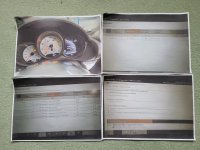
This cleaner clogged the filter and it generated the warning light message and the following DTC codes, see photos enclosed below.

Top left
Regeneration warning light on the dashboard, see Drivers Manual.

Top right
DTC P2463 Particulate filter soot load high

Bottom left
GPF data, showing soot values, ash load at 0.00%, and a differential pressure sensor reading at .75 hPa.

Bottom right
Code 26740 Particle filter regeneration needed.

Now what doesn't make sense is that the .75 hPa differential pressure sensor reading would not be high enough to trigger the soot regeneration message.

But yet we have readings of 40.00 % and 52.55 % in the soot values recorded, the highest we have ever seen in the last 2 years.

So what is this sensor controlling, you would expect a lot higher pressure reading from the soot load present.

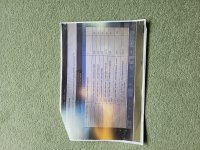
The last photo shows a typical GPF report from a car thats reporting a 100% oil ash load, and the usual no soot readings in calculated or measured data.

And to make matters worse, we have a minus differential pressure sensor reading on a filter thats supposedly blocked and needs replacing.

Its no wonder we haven't had any reports of a soot regeneration message on any of our cars, because we have never seen a differential pressure sensor reading high enough, and its unclear where the soot load information is coming from.

Its a shame that Porsche Technical will not contact us via the Porsche Club, we need an explanation on why we are seeing this confusing data, and why these GPF filters have been fitted, and for some reason ignoring the information we have posted out on our forum.

We have a database with over 2 years of data on our faulty cars.

We have always wanted to help them fix this issue on their cars, because it needs fixing.

They need to prove to us that that the issue we are finding with our cars, does not come under the heading of an emission control defect has discussed in our previous post 667.


Sorry for going on again

David
 

Attachments

  • 20250904_143054.jpg
    20250904_143054.jpg
    3.4 MB · Views: 8
  • 20250904_154918.jpg
    20250904_154918.jpg
    5.7 MB · Views: 8
I doubt it because even Porsche haven’t…

During my journey of virtually every part being changed at no point could the Brand tell the dealership what the settings should be.. and remember my car was virtually new as they even put in a new engine..etc etc etc …
 
Hi Guys & Girls

Without Prejudice

Following on from my last post, and trying to understand why we have this GPF data that doesn't make any sense.

We never see any soot values on the GPF report when the filter shows 100% ash.

Spent some time on the Internet and found some references to this as follows.

There are no soot values shown with 100% oil ash in a GPF because a 100% oil ash level indicates a critical system failure, rather than a measurable particulate level, suggesting the ash has filled the filter. In such a case, the ash has permanently accumulated and reduced the filter's volume, which prevents it from effectively capturing and burning off soot, or the sensors are unable to differentiate and measure the ash itself.

Understanding Soot vs. Ash
Soot:
This is carbon particulate produced by incomplete combustion, which can be burned off during the DPF (or GPF) regeneration process.

Ash:
Ash consists of incombustible material from engine oil additives that is not burned during regeneration. It accumulates over time, reducing the filter's available volume and efficiency.

Why Soot Readings Are Absent with High Ash

1. System Failure:

A 100% oil ash level indicates that the GPF is essentially full of ash and can no longer function as designed.

2. Reduced Volume and Efficiency:
The accumulated ash restricts the filter's channels, leading to increased pressure drop and reduced efficiency in filtering and processing soot.

3. Measurement Limitations:
The sensors in the system are designed to estimate soot levels based on pressure measurements and other factors. However, when ash levels reach the maximum, they render the normal soot estimation method inaccurate, or the sensors can't distinguish between the two when the filter is clogged.

4. Sensor or System Malfunction:
The "100%" ash level might also be a symptom of a faulty sensor or a system unable to accurately measure the ash load, which itself is a component failure.

When there's no soot value shown despite a high 100% oil ash level, its because the high ash load is what the system is reporting, not the soot level, and the ash itself doesn't register as a value for the soot sensor. A high measured ash load with low differential pressure suggests the ash is present but not blocking the filter. And the system may be using an algorithm that incorrectly represents the ash level, used by the vehicle's computer (ECU) and diagnostic tool (like a PIWIS tester) to indicate the accumulation of ash, rather than a measured soot value.

Surely now with all the information we have, and all the parts that have been fitted by the Dealers in a desperate attempt to fix this fault on our vehicles, the vehicles software needs closer examination.

We do know that an incorrect measured oil ash load that causes the engine light to come on, can be classified as an emission control defect, especially given the low differential pressure sensor readings, and failure of a new GPF to fix the problem.

In a previous post we mentioned that in some American states they insisted on emission control defect warranties for any 2019 vehicles, that were imported into the country.

Obviously they knew that GPF filters fitted into petrol vehicles would possibly need some development time, and there could be teething problems going forward.

These extra warranties covered the vehicles emission systems for periods longer than the standard warranty period, in some states this warranty cover can be up to 8 years, 80, 000 miles.

We would suggest that if you have the DTC code P242F oil ash load exceeded, you contact your local Porsche Dealer to get them to verify the code and the GPF information, reference the internal memo published in March this year concerning this very issue, and the fact that they have known about this issue since 2019, within the first year of production.

The Dealers are still now fitting parts to these cars, that may cause increased oil consumption in the future, and may create enough Ash to be a problem, but there is no ASH and never has been in our low mileage cars.

The Dealers needs to contact Porsche and register another vehicle with this fault, under the heading of a possible emission control defect.

We also need an awareness regarding checking the GPF oil ash % levels on these cars when they come in for service, and when they are sold. A bit like the EV vehicles now getting a battery health check after a few years of use.

We now have 90,000 views on this forum, on this subject, hopefully before we get to 100,000, we may get some conformation from Porsche, that they agree with us, and something urgently needs to be done to fix this problem once and for all.

Fingers crossed

Dave
 
Great work again Dave however for fear of sounding like a broken record, again, Porsche will not offer any form of solution unless it’s brought into the public eye and when I say that I mean the general public, not the closed doors of the Porsche community.

I think the motoring press would have grounds for a great article. I can’t understand what the fear is in contacting them.

Dan.
 
Hi Guys & Girls

Without Prejudice

Following on from my last post, regarding the oil ash % levels that don't seem to make any sense. I have had a look at the last 5 cars that recently had new modified filters fitted, on which these oil ash % values came back within a 1000 miles.

We had the following readings.

38%, 42%, 53%, 47%, and two readings from Paul's car that had 2 filters fitted 36% and 48%.

The dealers reset these cars to zero after carring out a regeneration on a new filter.

If we look at the % value change from the existing 100% that was on the car before the filter was changed, we have this information.

62%, 58%, 47%, 53%, 64% 52%, which is the % change in the measured oil ash value.

If you divide the figures above by 6 you get an average of 56%, which is the percentage of oil ash that disappeared from the software when the new modified filters have been fitted.

We all know that real ash can not come back into a new filter, thats just been fitted in such a short time, and low mileages covered.

Its like the vehicles algorithm doesn't put up with the regeneration zero percentage for long, and re introduces a measured value thats based on mileage covered, fuel used, or other factors that have been programed into the algorithm.

I found this information regarding why some manufacturers measure oil ash mass in milliliters (ml) instead of a percentage on DPF vehicles.

Manufacturers use ash mass in milliliters (ml) for DPF ash calculations instead of percentages because ash is a physical, non-combustible material that accumulates in the DPF, whereas percentages are used to describe the ratio of soot that can be burned off through regeneration, not the non-combustible ash. Measuring ash in ml provides a more accurate and actionable metric, as it reflects the actual volume of ash buildup, which directly impacts the DPF's functionality and lifespan.

Why Percentages Aren't Used for Ash:
Soot vs. Ash: Percentages are typically used to express the DPF's soot load because soot is a combustible material that is burned off during the DPF regeneration process.

Ash is Non-Combustible: Ash, a residue from lubricants and fuel additives, is non-combustible. It accumulates in the DPF and cannot be removed by regeneration.

Volume vs. Ratio: A percentage would indicate a proportion of the total DPF contents (ash + soot). However, this ratio doesn't directly reflect the physical volume of ash, which is the limiting factor for the DPF's lifespan, as ash occupies space that cannot be regenerated.

Why Milliliters (ml) Are Used:
Volume Measurement: Milliliters (ml) are a unit of volume and directly measure the actual amount of ash that has accumulated.

Functional Impact: The volume of ash is crucial for determining when the DPF is no longer functional, as excessive ash buildup can block filter channels, reducing filtration efficiency.

Actionable Data: Knowing the ash volume in ml gives manufacturers and technicians concrete data on the DPF's status and helps predict when the filter will need to be replaced rather than regenerated.

Interesting information, might explain why we have an oil ash % value at 100%, which isn't real.

Remember our Dealers and Porsche insisted that the replacement of a very expensive GPF filter that was blocked with ash, was required.

This was after they spoke to the Porsche Technical Department and the Warranty Department who offered no help at all, until we came along.

Funny that they also forgot the issues that they previously had in 2019 on these cars with the same DTC P242F oil ash load exceeded, which was confirmed by them recently in the internal memo sent out to the Dealers in March this year.

They even tried to convince us that wrong engine oil and driving style was the reason for not covering the cost to replace the filter.

And to make matters even worse, they said your extended warranty will not cover it, the part wasn't actually in the exclusion section, but that didn't matter, but it is now.

This has turned out to be a major miss-diagnosis on their part.

They have ignored the very, very low differential pressure sensor readings, which confirms that no back pressure was present and the filter was not blocked, this has never made any sense at all.

So we accepted their diagnosis under protest, convinced them to cover the cost under warranty on the GPF information we received, and look what's happened.

We still have the problem, an oil ash % reading that still makes no sense at all.

We need a clever software person from Porsche Technical to go into the software and change the parameters in the oil ash calculations, job done.

Why is it taking so long, sounds like a really simple thing to do.

Dave
 
Hi Dave
Very interesting information.
If they were to change the software parameters, do you think they would need to re-submit under the current emission regulations and that is why they are reluctant to do it?
Keep up the good work, I'm sure you will succeed in the end!!
Regards
Mark
 
Hi Mark

Without Prejudice

Yes, from what I have read on the Internet any alterations made by Car Manufacturers to the emmision parts or software, on their vehicles, has to be reported to the organisation that signed off the original certificate of conformity.

The DVSA revised its Categorisation of Defects in Roadside Checks and Vehicle Tests in 2019 to ensure consistency, clarify standards, and help drivers better identify and fix vehicle issues. Key changes included updating specific defect categories like lighting and tyre pressure, clarifying the distinction between best and worst-case scenarios for load security, and incorporating new items and notes for safety features and emissions control. These revisions aimed to improve road safety, align with new EU directives, and provide clearer guidance on vehicle maintenance standards.
Key Changes in the 2019 Revision:
  • Load Security: The load security matrix was removed, with a clearer distinction drawn between 'best practice' and enforcement action for insecure loads.

  • Tyre Pressure: Introduction of tyre pressure measurement at the roadside for single fitment tyres.

  • Engine and Emissions: Inclusion of specific notes for engine malfunction indicator lamp (MIL) defects and emission control system faults.

  • Lighting and Registration Plates: Additional notes for assessing lighting defects and defects related to registration plates.

  • Indirect Vision Devices: Updates to the guidance on indirect vision devices (mirrors).

  • Modified Seatbelts: New defects were added for modified seatbelts.

Just some more information thats out there on the Internet

Dave
 
Hi Dave

Without Prejudice

This is more information that points to them knowing that the emission control system failure could be a problem on all vehicles when GPFs were introduced in 2019.
 
Hi Mark
Following on from your post,

Without Prejudice

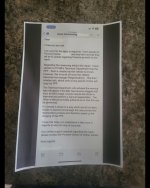
When we managed to get our 3rd GPF authorised and paid for by Porsche in June last year we asked for confirmation from Porsche Technical on why the owner of this car and others had never seen a soot warning light come on the dashboard.

This was their response below.

Again this clearly shows that the software responsible for the soot loading regeneration was not working correctly, yet the Technical Department said it should, has mentioned in the drivers manual.

If you remember I offered a reward of £150.00 to anyone who had photos of the regeneration warning on the dashboard.

No one came forward.

We are now looking at what happened in 2019 when 718 owners reported the DTC P242F oil ash over load in the first year of warranty.

The Porsche internal memo on this subject, confirms this happened and the GPF was modified post December 2019.

Could I ask that anybody affected by this issue in 2019 to contact the Club.

Kind regards
David
 

Attachments

  • Screenshot_20250913_192652_Gallery.jpg
    Screenshot_20250913_192652_Gallery.jpg
    1.6 MB · Views: 17
So the Board just accept what Porsche GB say and move on........ Leadership is not just about accepting the status quo, its about acting pro-actively for the people you lead (who in the case of GPF failures have just been ignored, as has been stated above)
 
Last edited:
Please don't group Dave, John, etc in the same category as the Board. I think what has been done by them is way beyond anything you would reasonably expect. Its the lack of visibility and pro-activity from the Board that I was highlighting, which mirrors that of Porsche.
 
Last edited:
In my opinion, Porsche have consistently stonewalled any approach about this issue, whether from the club, their own dealers, or any media channels. They simply refuse to engage. I expect them to continue this policy and I don't see there is much we can do about it. It has worked before on all number of issues - PDK gearboxes, IMS bearings, bore scoring, faulty wheel nuts etc. etc. Ultimately the dust dies down as the issue either resolves itself, gets fixed, or becomes a 'charcteristic' that the market accepts. (e.g. you would not buy a 997 without a borescope test, even though the number of cars affected is actually less than 2%)

The big mistake in this instance was letting dealers try to charge owners £7000+ to fix a (non existent) fault and claim that this was not covered under warranty. If these cars had just been dealt with in the dealer network the issue would not have seen the light of day. The fact that Dave's research and work on this has virtually eliminated that cost risk to owners is the big success of the whole programme.

Regarding what the club, or its Directors can do, again my opinion, it is virtually nothing.
- the club's relationship with Porsche is a marketing one, not technical.
- we have 23000+ members of which say 20 - 25 have been affected by this issue and perhaps 200+ have cars that might be affected. These are the sorts of numbers that could apply to many issues.
- despite the global success of the Cayman / Boxster programme, with the cessation of production and the unavailabilty of a successor Porsche has other priorities to deal with.

I know that this matter has been raised in discussions between the Directors and Porsche but I believe that there was 'nothing to say'. Back to my first point.

We will try to keep this alive as long as possible, to protect members who have these cars. If anyone has any suggestions as to what else the club can do, and where it will get the leverage to do it, then please shout.
 
I agree completely with all the points you’ve raised John. Facing a very costly emissions software update on a car going out of production, regrettably Porsche have chosen to stonewall the issue and have missed a trick in the process. It would have been far more sensible quietly to just replace the GPFs, especially for cars under the Extended Warranty programme, but have now generated a lot of bad feeling - and concern - amongst owners of these cars. Very poor show Porsche!👎

Hats off to Dave for his perseverance and to all those - yourself included - who have sought to find a workable solution for those affected.

Jeff
 
Speak to the motoring press John. I really can’t understand what the issue is with speaking to the likes of Auto Express.

I wont mention it again as my suggestion seems to be falling on deaf ears.

Dan.
 

Posts made and opinions expressed are those of the individual forum members

Use of the Forum is subject to the Terms and Conditions

Disclaimer

The opinions expressed on this site are not necessarily those of the Club, who shall have no liability in respect of them or the accuracy of the content. The Club assumes no responsibility for any effects arising from errors or omissions.

Porsche Club Great Britain gives no warranties, guarantees or assurances and makes no representations or recommendations regarding any goods or services advertised on this site. It is the responsibility of visitors to satisfy themselves that goods and/or services supplied by any advertiser are bona fide and in no instance can the Porsche Club Great Britain be held responsible.

When responding to advertisements please ensure that you satisfy yourself of any applicable call charges on numbers not prefixed by usual "landline" STD Codes. Information can be obtained from the operator or the white pages. Before giving out ANY information regarding cars, or any other items for sale, please satisfy yourself that any potential purchaser is bona fide.

Directors of the Board of Porsche Club GB, Club Office Staff, Register Secretaries and Regional Organisers are often requested by Club members to provide information on matters connected with their cars and other matters referred to in the Club Rules. Such information, advice and assistance provided by such persons is given in good faith and is based on the personal experience and knowledge of the individual concerned.

Neither Porsche Club GB, nor any of the aforementioned, shall be under any liability in respect of any such information, advice or assistance given to members. Members are advised to consult qualified specialists for information, advice and assistance on matters connected with their cars at all times.

Back
Top