Hi Guys & Girls
Without prejudice
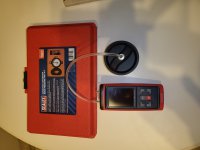
I would just like to share this technical video information with you, regarding the workings of the differential pressure sensor and show you what happens when you apply pressure to the sensor.
This would be the same when the filter gets blocked with ash, or soot.
Remember this sensors function is to tell the ECU when the soot loading in the GPF filter is at a stage when a regeneration is required because back pressure is building up.
I have said on lots of previous posts that whenever we have a GPF filter showing the 100 % ash DTC, we have a very low differential pressure sensor reading, usually no higher than 6.0 hPa, which is no back pressure at all.
If you watch closely on the video he applies a pressure of around 7 to 8 PSI which is around 50 kpa, to the sensor and this creates a voltage of just over 3 volts that's sent to the ECU.
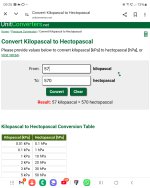
This is converted to a differential pressure reading of 57 kpa which is pressure the ECU is seeing from the sensor.
If you then convert the 57 kpa to hPa which is what are cars sensor works in, you get 570 hPa.
We have never, ever seen a differential pressure sensor reading any where near this level.
And even if you lower the pressure by half it would still be around 285 hpa, still very high.
How can these fiters be blocked when we have such ridiculously low differential pressure sensor readings, it doesn't make any sense.
And why when we have ask our dealers to check for back pressure on our cars do they not do it.
The fact that the dealers are fitting lots of new filters on our cars and the oil ash problem is coming back after very low mileages, clearly suggests that the diagnosis was not correct.
I don't understand why a simple back pressure check is not carried out because this information is crucial to the correct diagnosis of this fault.
It's no wonder we never see the soot loading message on the dashboard for regeneration, when we see these very low pressure sensor readings on a supposedly blocked filter.
Sorry to mention this again, the oil ash measured value comes from the algorithm written within the ECU, and why is there never any information in the oil ash calculated section of the GPF reading report.
We could stop upsetting the owners of these cars, by doing the job right, this would stop the dealers looking bad using the reasons for failure, wrong oil, and to many short journeys.
Porsche Technical could start looking at the software instead of wasting money and time on new GPF filters.
Surley when these GPF filters go back to the manufacturer they will be tested, to confirm they are indeed blocked at 100%, has anyone at Technical checked to see if this is the case.
Dave
Dave



 Just a remap with the standard set-up will release more than enough power and torque without resorting to significant brake upgrades.