Making its world premiere in Queens, New York, the Mission S represents a new chapter in Porsche’s design philosophy, combining inspiration from the marque’s historic sports cars with modern styling and a driver-focused interior.
Presented as part of Porsche’s ‘Sportwagenschmiede ’35’ strategic realignment, the concept explores three guiding principles for future models: authentic, consistent and timeless design.
“A Porsche must be recognisable as a Porsche at first glance,” says Dr Michael Leiters, Chairman of the Executive Board of Porsche AG. He adds that the Mission S offers a glimpse of the ideas and design features that will shape the brand in the coming years.
Inspired by Porsche’s sporting heritage
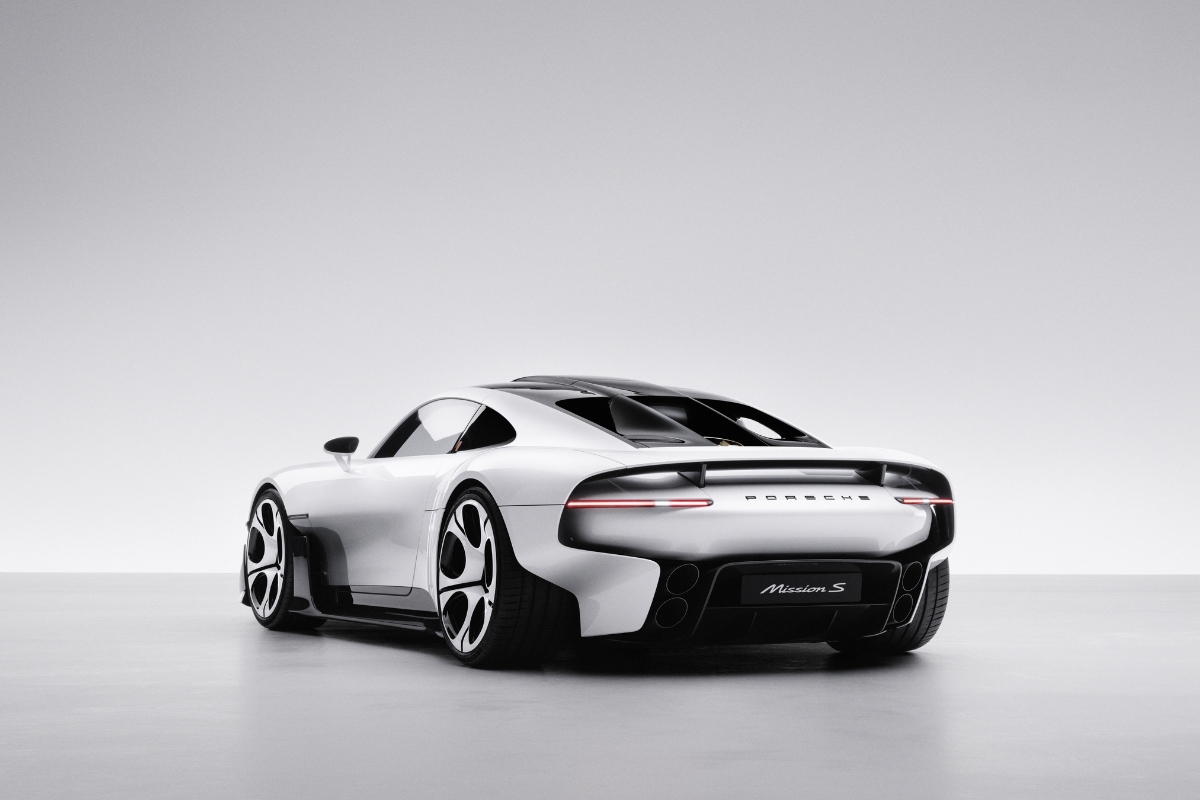
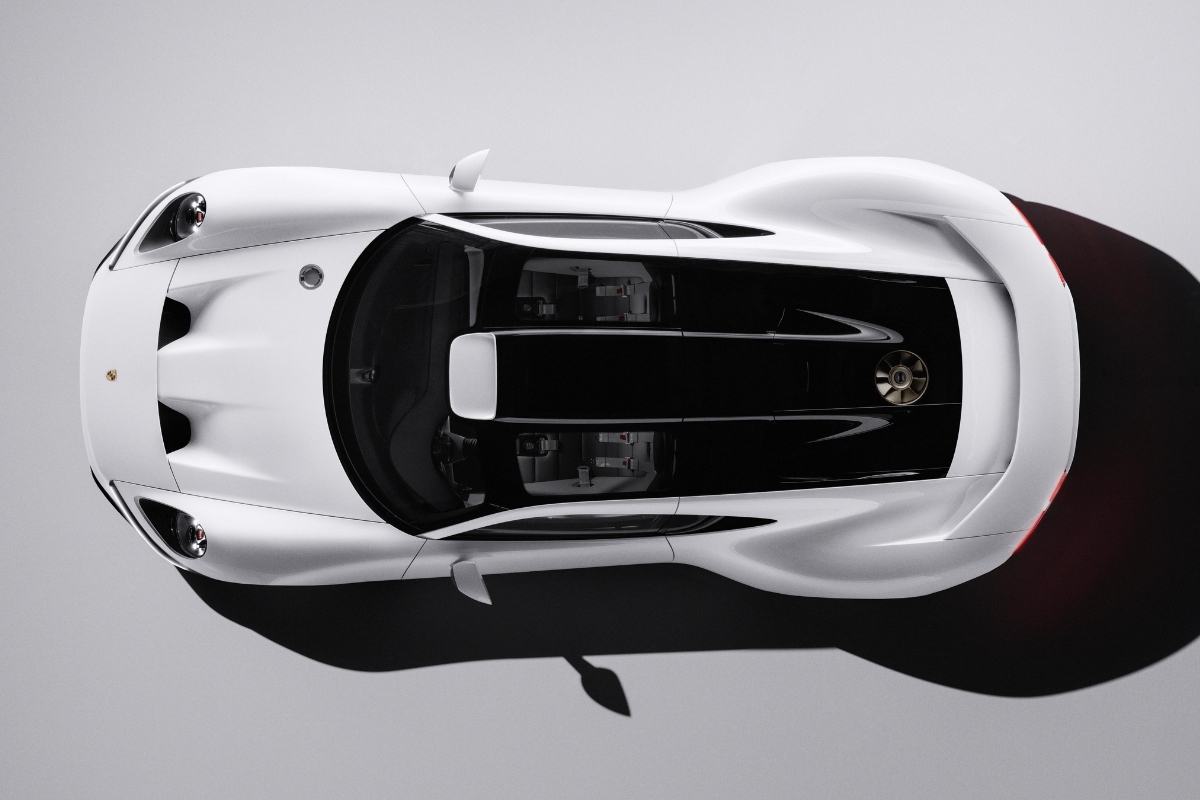
The Mission S draws on several iconic models from Porsche’s history, reinterpreting familiar design features for a contemporary audience. Its rounded headlights and prominent front wings recall the 911, while its low front end takes inspiration from the GT1. The roofline references the 959, and the rear incorporates a car-in-car concept derived from the GT1.
Its mid-engined architecture defines the car’s proportions, with a distinctive roofline, sculpted bodywork and integrated active rear wing. The wheels also pay tribute to Porsche heritage, featuring a lightweight design inspired by the ‘dial’ wheels of the 928.
The choice of launch location carries its own historical significance. The Mission S was unveiled on a pier in Queens overlooking the Manhattan skyline, the same location where photographs of the mid-engined 550 Spyder were taken in 1953. The 550 Spyder helped establish Porsche’s identity as a manufacturer of high-performance sports cars and played an important role in the brand’s success in the United States.
A driver-focused interior
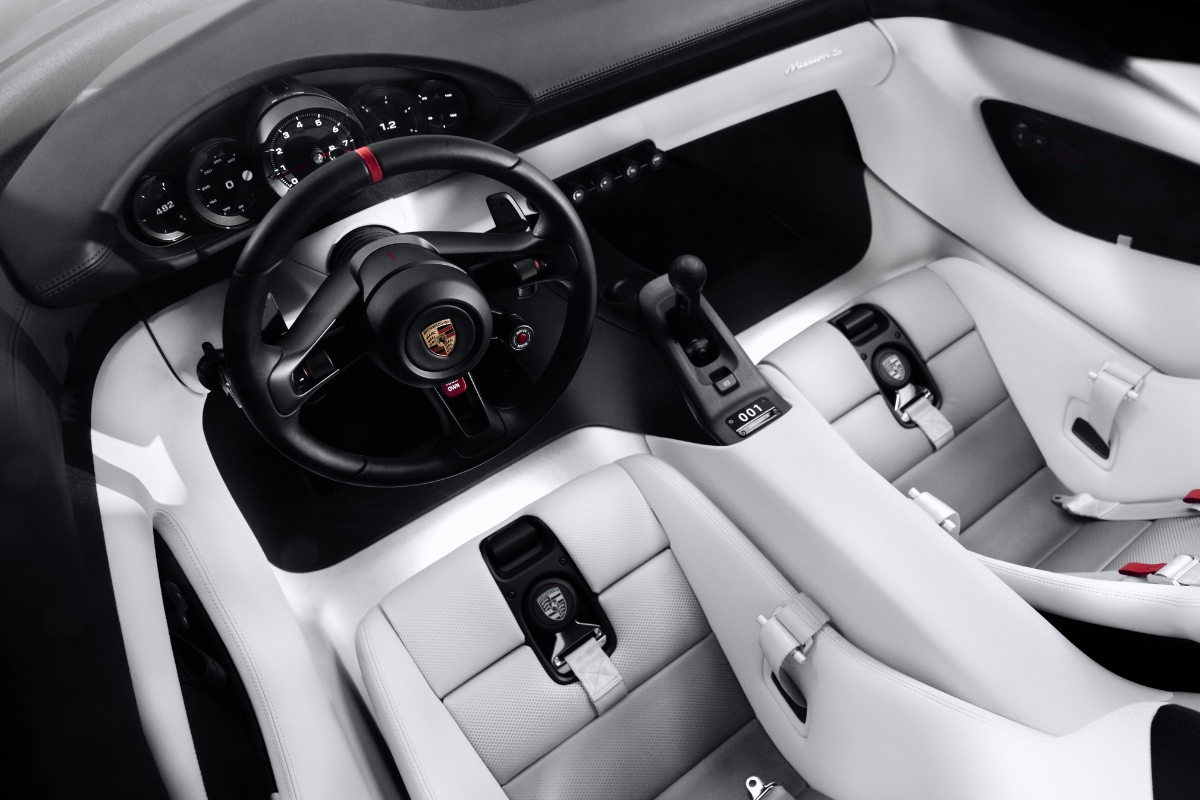
Inside, Porsche has returned to the principles of simplicity and direct driver engagement, drawing inspiration from early models such as the 550 Spyder and 356.
The cabin combines traditional physical switches and buttons with modern digital displays, with the controls arranged around the driver. Five circular instruments sit behind the steering wheel, centred on a rev counter featuring an analogue needle and a digital display. Their arrangement can adapt to the selected driving mode, while the rev counter moves closer to the driver to reinforce the sense of focus.
In a further departure from current interior trends, the Mission S features neither a permanently integrated central display nor a fixed passenger screen. Instead, a retractable smartphone system provides navigation and information when required, while the My Porsche App offers access to vehicle functions and historically inspired instrument designs.
The interior’s white, grey and red colour scheme also references Porsche’s motorsport heritage, with specially developed finishes complementing the concept’s sporting character.
A new direction for Porsche sports cars
Beyond its design features, the Mission S signals Porsche’s intention to explore a permanent super sports car offering above the 911. Rather than a one-off hypercar, the proposed mid-engined platform is intended to provide a versatile addition to the brand’s future model range.
Tobias Sühlmann, Head of Style Porsche, describes the concept as the result of a holistic design strategy, adding that its direction will soon be translated into future production models.
While the Mission S is a vision model, it provides an insight into how Porsche intends to balance its established design identity with new ideas, maintaining the connection between driver and car that has defined the marque for generations.