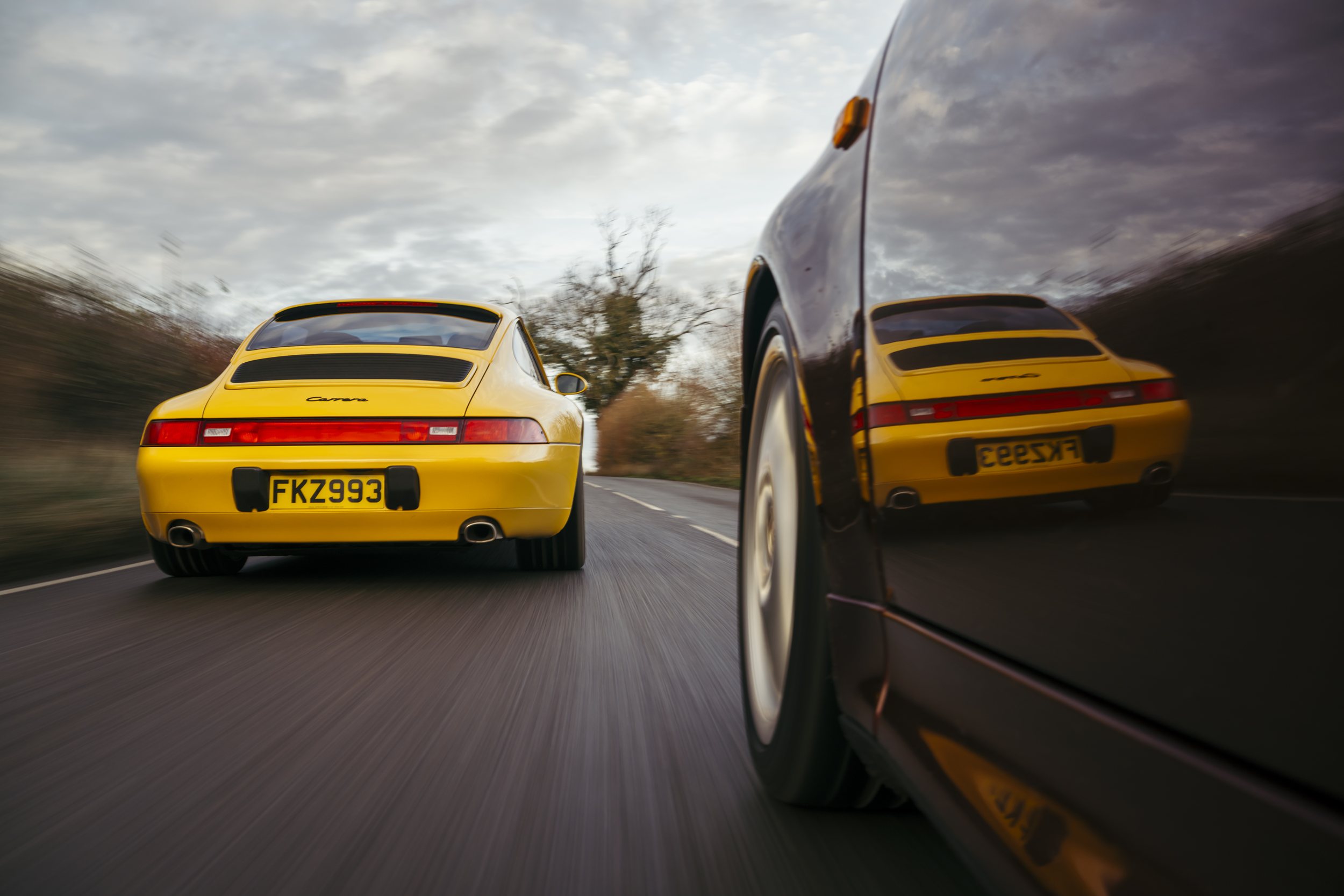
If I’m not careful I’m going to become mesmerised by the impossibly shapely rump of the 993 Carrera 4S ahead, and that might lead to a 993-shaped hole being punched through the English countryside. “It looked so good, I missed my braking point’ probably won’t cut the mustard on the insurance claim, and I’m not so sure the owner of this simply gorgeous Speed Yellow 993 Carrera will be that impressed, either. But come on: has any Porsche - or car, even - had a more curvaceous backside than an S-model 993? I think not. As I watch its buxom behind dance down the B-road in front of us, my view is perfectly framed by that traditional 911 windscreen, with flashes of yellow in my peripheral vision. My brain is going into overdrive: I’m back in the early 90s, squirrelling away hard-backed Porsche brochures from my local Porsche Centre, reading Performance Car Magazine and longing for the day I could even just sit in a 993, let alone drive one. It’s 1994 again, and my life is fuelled by this most exciting of new Porsche 911s - Porsche back on form again, mojo rediscovered, a blast of Speed Yellow, Guards Red and Rivera Blue signalling a new-found confidence (even though most seem to be silver or dark blue in reality). Good times. Porsche on the comeback trail.
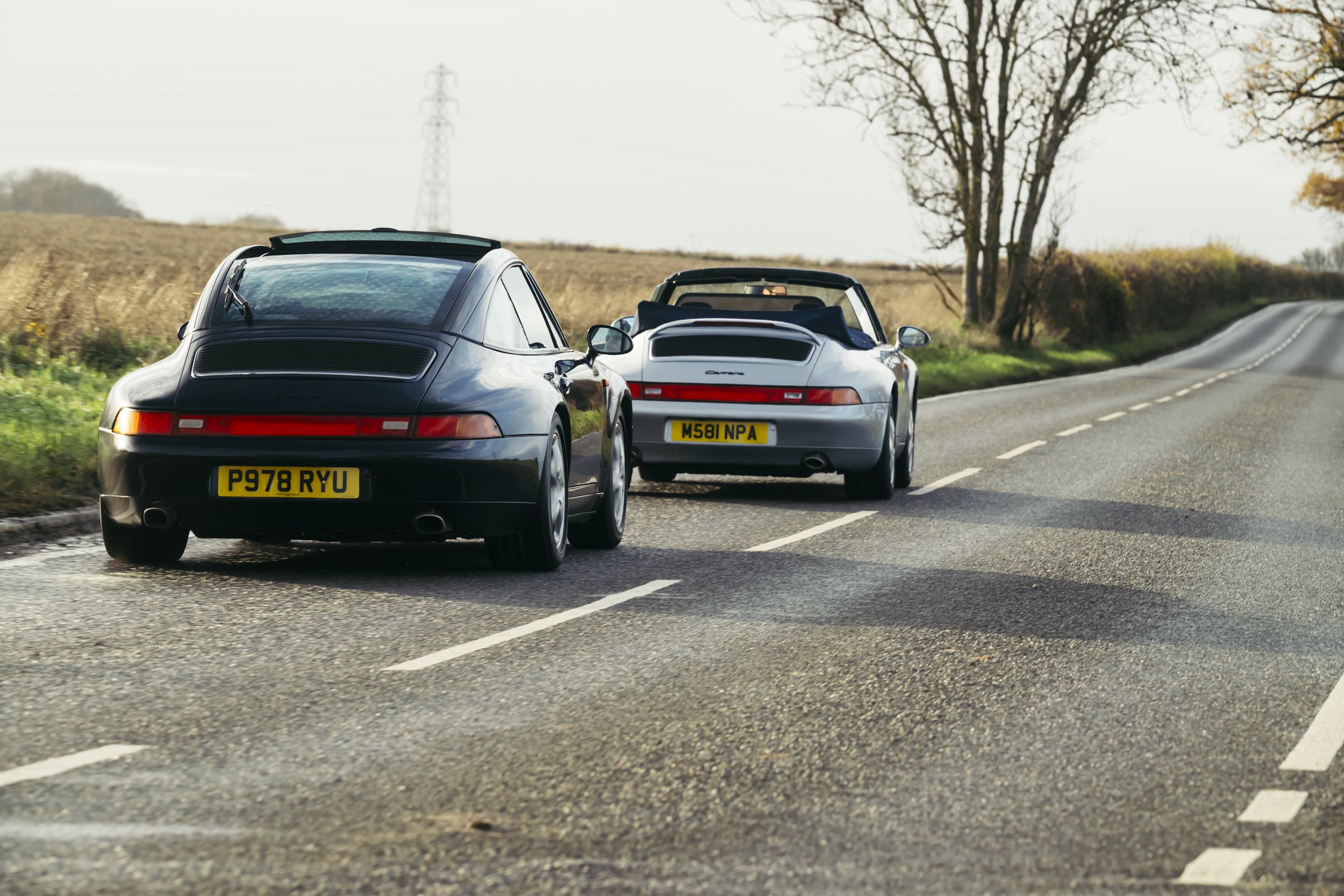
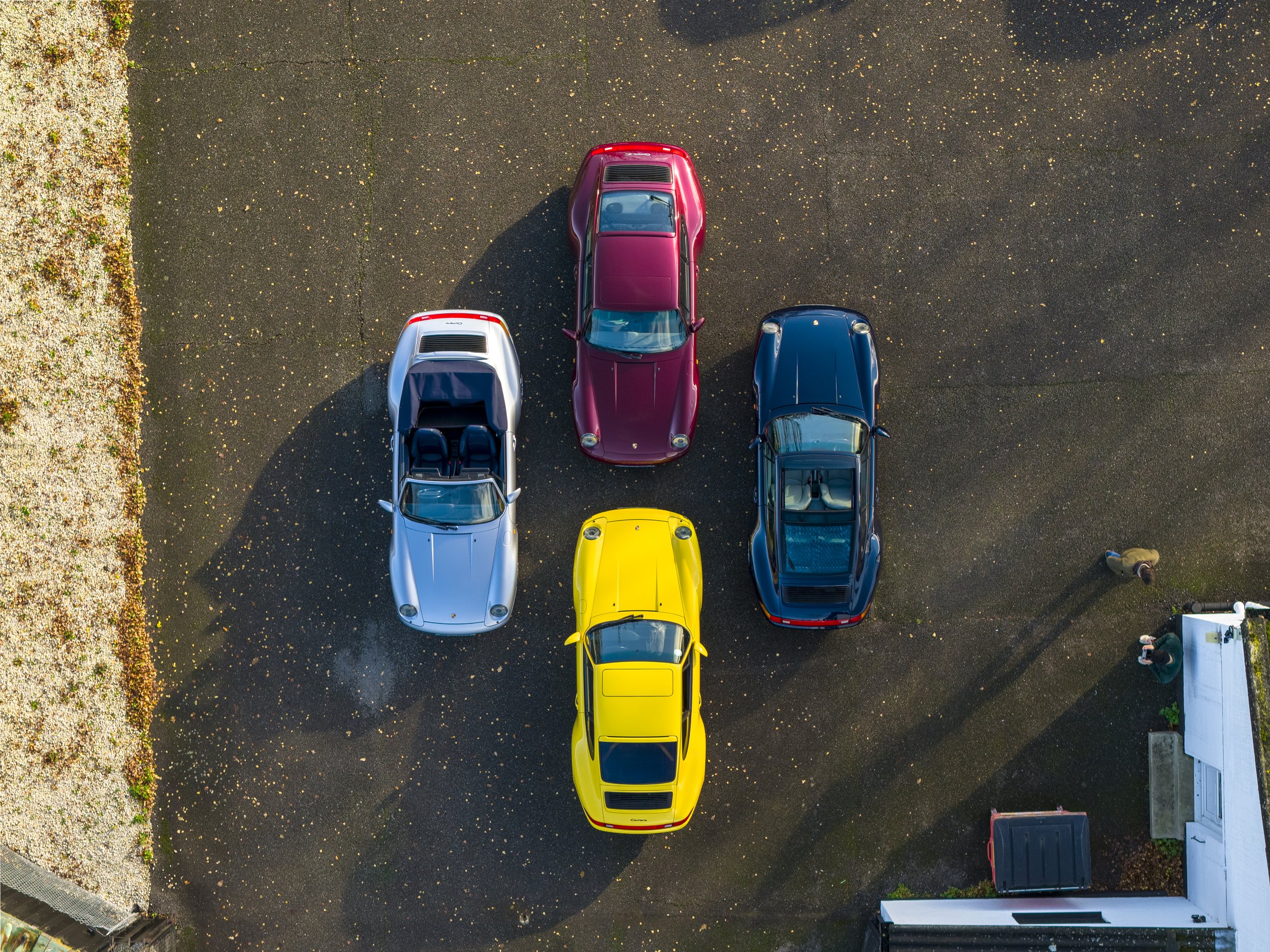
We’ve assembled a group of 993s not because of any particular anniversary, but rather because it felt like the right time to revisit this icon of Porsche history. Moreover, the opportunity to drive such a comprehensive cross section of Carrera-motivated machinery, courtesy of Porsche Specialist Paul Stephens and his combined stock list and customer base, seemed like too good an opportunity to turn down. In these times where social media is seemingly obsessed with Carrera RS models and barely used 993 GT2 road cars, just how strong remains the appeal of the humble Carrera, and where does it sit in the current context of Porsche road cars?
The disarming fact surrounding the 993 is that it was a car born in crisis, and in some ways, a stop gap. That’s quite a shaky start for a car that very quickly passed straight to legend status, but it’s true. And it’s important to remember that while Porsche’s situation looked dire when the 993 arrived, any car takes years to bring to market, and the rot had set in long before.
When Dr Ulrich Bez arrived at Porsche as its new technical director in October 1988, taking over from Professor Helmut Bott, the Porsche ship was looking unsteady. While the Peter Schutz era had brought massive profits for a while, it had also lacked a clear direction in product development, and now the world’s financial situation had taken a turn for the worse, Porsche was in trouble. Bez, the man who would later lead Aston Martin charismatically and sometimes controversially on its own renaissance, was a divisive figure at Porsche, but he wasn’t alone within the company in finding the 964 very underwhelming. That was especially disappointing, given the 964 was in the process of just being launched and was already significantly delayed due to problems during engine development and the drain on resources with other projects such as the hugely complicated and expensive 959. As Porsche’s racing success crumbled on the track, the company faced a perfect storm. A succession of CEOs came and went.
Yet while Bez and co didn’t like the new 964, he was a huge fan of the 911 per se. While many at Porsche felt it was time to bury the 911 concept and design an all-new car (witness another Bez project, the stillborn 989 four-door), Dr Ulrich was a huge supporter of the concept: he just felt it needed to be upgraded with a new spirit. Much of this would be blueprinted in 1990, with Porsche’s overall health looking increasingly precarious, when legendary engineer (and no mean driver himself) Peter Falk, compiled a 20-page report on ‘Porscheness’. Answering the question, ‘what makes a Porsche,’ had always been steered by Ferry, but as he neared the end of his life there needed to be new guidance from within.
Falk’s document centered around one word: ‘agility.’ That wasn’t to be interpreted as just handling agility, but rather a faithful connection between man and machine, across all the controls. No element of the car was overlooked by Falk, who even considered driver visibility and other such esoteric points. Keen to add their own stamp too was Porsche’s new head of design, Harm Lagaay, who joined in January 1989 and who oversaw Steve Murkett’s radical and highly divisive Carrera Panamericana concept (see Porsche Post issue 460), which established much of the ethos that would filter into the new 911. That car was being worked on by Englishman Tony Hatter, and the brief was to make it a much more emotive design than the 964. It’s always fascinating to view things through the lens of history: the 964 is a much-loved 911 today, with its own unique style, but in-period there were many who found its slab sides and very functional detailing somewhat boring.
Bez envisaged a new ‘super 911’. It would be more practical, accessible, and easier to live with. It would be more capable, faster yet more refined. And it would pull on the heartstrings more, in the process completely redefining the 911 concept. But how?
The simple fact was that the 993 was Porsche going all in. The success or otherwise of the new car would not only establish whether the 911 as a model series had a future, but also fundamentally whether the company had one too. It’s worth remembering that for the 1996 model year, Porsche offered no other car for sale than the 993. If it had failed, or sold slowly like the 964, it would have been game over.
In the end, not everything Bez, Lagaay and the team wanted was granted. There was no new roof structure, which saved five million deutschmarks, and the new interior, which the design department had been working on, was axed with a saving of two million deutschmarks. But it wasn’t all bad news. On the engine front, Porsche was already looking at water-cooling, and pondered over new V6 and V8 engines. In fact, a prototype was built with a water-cooled Audi V8, but in the end, the 964’s air-cooled unit was carried over, yet completely revised to be lighter and yet more potent, with 272bhp and 243lb ft of torque. It was connected to a G50 box that now had an extra gear (six), and then there was the chassis, perhaps the most controversial point of all. The 911 development team really weren’t impressed with the suspension solution of the 964, where they felt far too much road noise was emitted into the cabin from the rear struts, experienced axle tramp under hard acceleration and disliked its tendency to wander at high speed, to name just a few things.
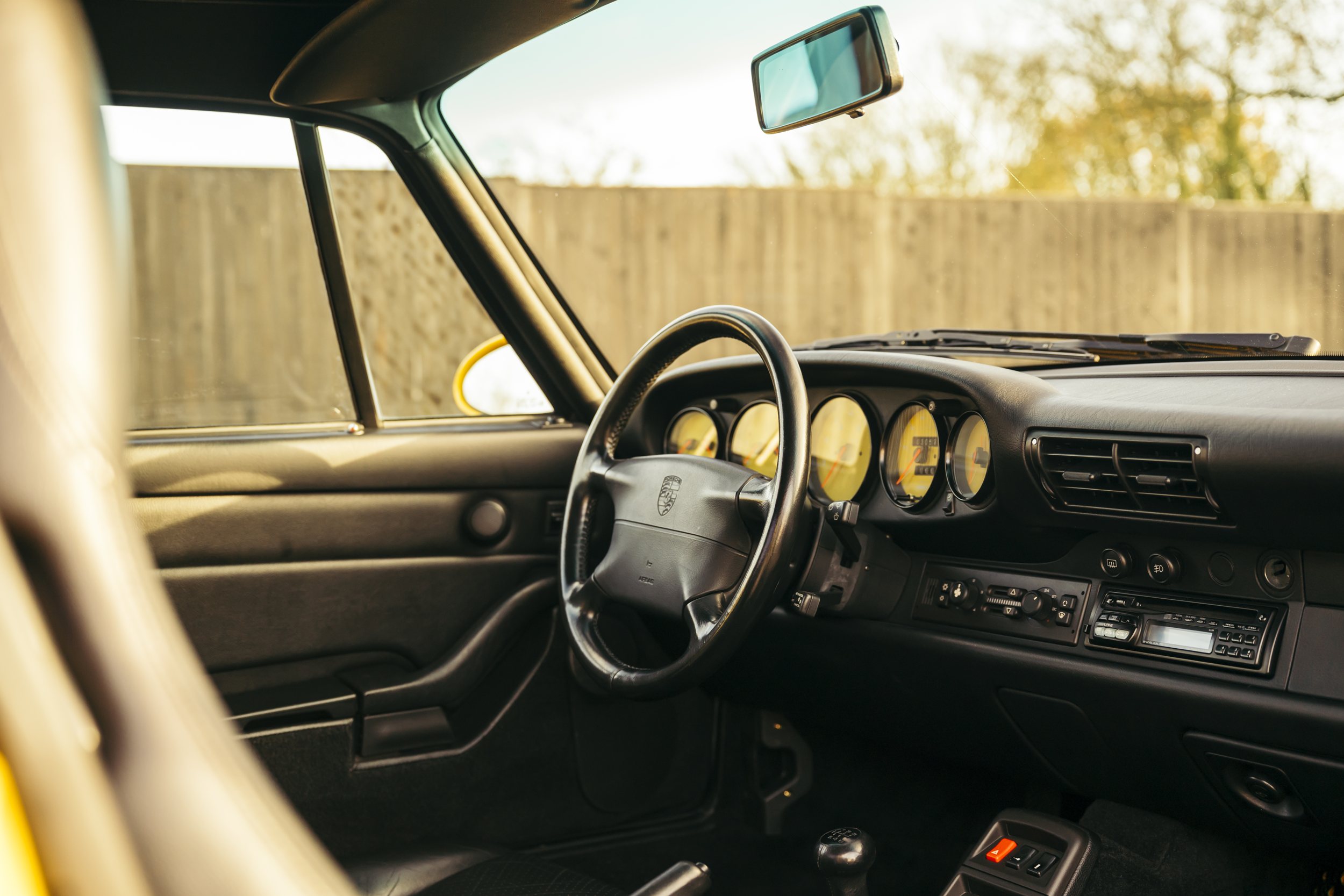
Initially, they requested the double wishbone rear end as used on the stillborn 965, but it was vetoed on grounds of cost. Bez would not accept the use of trailing arms, though, and won the battle. The result was a new multi-link rear axle, incorporating ‘Weissach’ passive rear steer tendencies as first seen on the 928. Suddenly, a whole new world was opening up for the 911.
Of course, that’s a very condensed version of a story that ran across a number of years. Bez left Porsche in late 1991; ironically, around the same time as an exec yet to turn 40 returned to Porsche to head up production. His name was Wendelin Wiedeking, and by the time the 993 was ready to go on sale he’d already changed Porsche the car company by all recognition and was now the man in charge overall. Although he’s perhaps more closely associated with the water-cooled era, it was his name over the door as the 993 began its life for the 1994 Model year, and it didn’t take very long to realise that far from being a stop gap, the new car had the potential to completely revitalise Porsche. Wiedeking was no fool: not only was the 993 a far superior car, it was also a vastly cheaper one to produce.
How much so becomes obvious as I climb behind the wheel of our first 993 today. I’m starting with the Targa. Perhaps an odd choice, seeing as it didn’t appear until late 1995 for the ‘96 model year, but there’s method in my madness, as this is the only car here with the Tiptronic S automatic gearbox option. Although such a choice of transmission was very popular back when the 993 was new, and has its disciples, I must be honest and say that for me, it emasculates the heart of the car. Back in the September issue of Porsche Post we drove an identical 993 Targa Tiptronic S for our Targas cover story that had been brought over by the Porsche museum, so I won’t dwell too much on the open roof side of things here, save to say that it brought a totally new beginning for Porsche’s halfway house open car. I’ve always really liked the look of the 993 Targa, and it’s such an appealing car once you’re inside - compact and cosy, but with a wonderful feeling of airiness. It might not be the driver’s choice in the range, given its reduced torsional rigidity, but as an all-rounder or something to tour in, there can’t be much if anything that’s better.
That four-speed box really does hamper the performance though, feeling as if it has robbed the flat six of 100bhp. You can tap the lever up and down or use the steering wheel buttons to gain some control over the choice of gears, but the jolt that accompanies a downchange is very clumsy, and an affront to anyone who takes pride in rev matching the manual way. It’s a very real lesson in how far technology has progressed over the intervening 30 years, because the PDK option today can do literally everything without fault, with both better economy and performance thrown in for good measure.
That being said, gearbox-aside, the inherent rightness of the 993 is very evident from the way the Targa flows down the road, complete with a delicious six-cylinder rumble and wail from over the shoulder. It’s a very appealing package.
It’s into the Cabriolet next, and a car that I have to admit greatly exceeds my expectations. I am always drawn towards coupes, but the manual C2 Cabriolet is just a delight: so easy yet involving and incisive to drive, and with the type’s much-improved ride quality and refinement, it’s patently obvious it would be a lovely thing to live with, or to take out for that indulgent summer’s drive. Then again, even in the middle of winter, with the heater blaring and the wind deflector in place (another new 993 adoption), the journey on these Essex B-roads is a simple delight, the gearbox so slick and well-weighted, and the engine’s throttle response perfectly attuned to smoothing out swapping ratios. I had thought it might feel a little wobbly in the structure, but in normal driving it seems more than together enough, and I can’t resist a wry grin at the thought that Porsche engineering luminaries such as Andreas Preuninger and Frank Steffen Walliser are amongst the world’s 993 Cabriolet owners. Clearly, they know something I didn’t, but maybe now the appeal is dawning on me…
Nevertheless, it’s the two coupes present that are really getting me excited. Porsche Post’s Managing Editor, Steve Bennett, has just driven off in the C2 coupe, so the shape of the gorgeous Arena Red Carrera 4S beckons. The four-wheel drive version of the S came first, for the 1996 Model Year T Series, followed by a rear-wheel drive S model announced in August 1996 for the subsequent V Series. The S recipe was to adopt the wider rear body as used on the Turbo model, but with the standard retractable rear wing of the Carrera. The Turbo’s brakes were also fitted, along with similar Turbo Twist 18” alloy wheels. That wasn’t the only change though, because the introduction of the 4S coincided with a typically subtle Porsche evolution of the 993 as a whole, which at its core centered on the adoption of a revised flat-six, now featuring the Varioram setup that had debuted earlier in the year on the 3.8 RS. The variable length inlet tracts, combined with bigger valves, saw power jump to 285bhp and torque to 250lb ft, with a fatter delivery of pulling power promised lower down the rev range. There was an added factor though, in that Porsche then adopted the longer gear ratios from the US market cars (the so-called G50/20 ‘box), for lower noise and emissions levels in European markets.
However good the 4S looks, the last time I drove one I was left mildly disappointed that its teeth looked more potent than its actual bite. After all, the extra body width and equipment (and aerodynamic drag) added a considerable heft to the base Carrera’s kerbweight, even if the four-wheel drive system was considerably lighter than in the 964 days. That’s because Porsche had junked the 964 C4’s complicated system of mechanical differentials, that made the car prone to understeer, and replaced it with a much lighter viscous coupling mounted in front of the rear diff. For the first time it was teamed with brake force distribution (individual wheels braked under the ABD moniker) and a rear LSD, and it weighed half of the old setup while feeling much more rear driven.
It only takes a few hundred yards to realise that a fit Carrera 4S is quite something to behold. The changes to the drivetrain yield a quite different driving experience, where gears are held onto for longer and your gear changing arm is subsequently less busy, but the upside is the revised engine’s newfound potency at higher rpms, where it really does sing above 4,000rpm. A power output beginning with a ‘2’ really doesn’t seem very spectacular these days, yet the 4S feels very keen, and its pace across the ground is surprising. While there’s no doubt that the wider rubber and extra driveshafts blunt the delicacy of a 993 to a certain extent, in this car you’re exchanging that for a level of grip, traction and braking performance that is much more comparable to a modern car - yet all within the compact confines of a traditional 911. That equates to a level of usable B road performance that’s quite an eye opener, combined with the interactivity that’s at the core of the 993 driving experience and of course, those wild looks. Perhaps there’s less of an advantage to going the 2S route, over just merely aesthetics, but this 4S is a corker.
Which takes us back to the beginning - and the feeling that I’ve saved the best to last. The humble 993 Carrera, in its original form, was only made between August 1993 and August 1995, and the C2 model left sale first, making way for the earliest 996s in late 1997, while the four-wheel drive models including the Turbo continued on into 1998.
It’s not difficult to see why the 993 took the motoring world by storm when you drive a beautiful example such as this. With only 30,000 miles on the clock, and a recent full suspension refresh from Paul Stephens, it feels wonderfully tight and together, and simply devours our test route, with a perfect blend of pace, chassis feedback and driver enjoyment. The very best cars have a balance to them, where no one element overshadows the rest, and this Carrera is exactly that, from the pure feedback through the steering wheel rim to the keenness of the engine and the layers of sophistication to the chassis. I love the way you feel the nose of the car gently bob up and down as the weight distribution is exposed, and the confidence you feel from corner turn-in through to mid corner stability and its willingness to hunker down under power on the exit. It seems incredibly friendly yet also a real challenge, while all those other 911 attributes we take for granted, like practicality, footprint and even economy, are present as usual. It may be 30 years old, but this simple Carrera still feels every little bit as relevant now as it did then - a car for every occasion.
There was a time when you could buy a used 993 for not a lot of money at all, but those days disappeared quicker than most have in the various lifetimes of successive 911 generations. The 993 has always had an air of success around it, unlike perhaps the 964 and its modern pretender to the used value 911 throne - the 996. That can make the 993 Carrera seem less accessible for many - which it is - and that’s a pity, if only because it’s so good it’s a shame more of us can’t get to experience that magic, especially as younger generations of enthusiasts come through.
When the time came for the 993 to make way for the next step along the path, the very last of its type to roll off the production line was a Mexico Blue 4S in 1998. The 996 may have ushered in a new era, but what if Porsche had agreed to a more radically different body and a new interior? What if regulations hadn’t forced a switch to water-cooling? These cars don’t really feel ‘old’, even now.
The last narrow bodied 993 built - a black C4 with a special interior - was sold to none other than a Mr Ulrich Bez. The stopgap 911 that many said couldn’t be made had literally saved the company, in the process laying the foundation for the world conquering success that was to follow over the subsequent 25 years, so who can blame its chief exponent for acquiring one while he still could…
This feature was written by Adam Towler and first appeared in the February 2026 issue of our monthly Club magazine, Porsche Post. Join today to receive your copy, as well as enjoying a host of exclusive member benefits and savings.