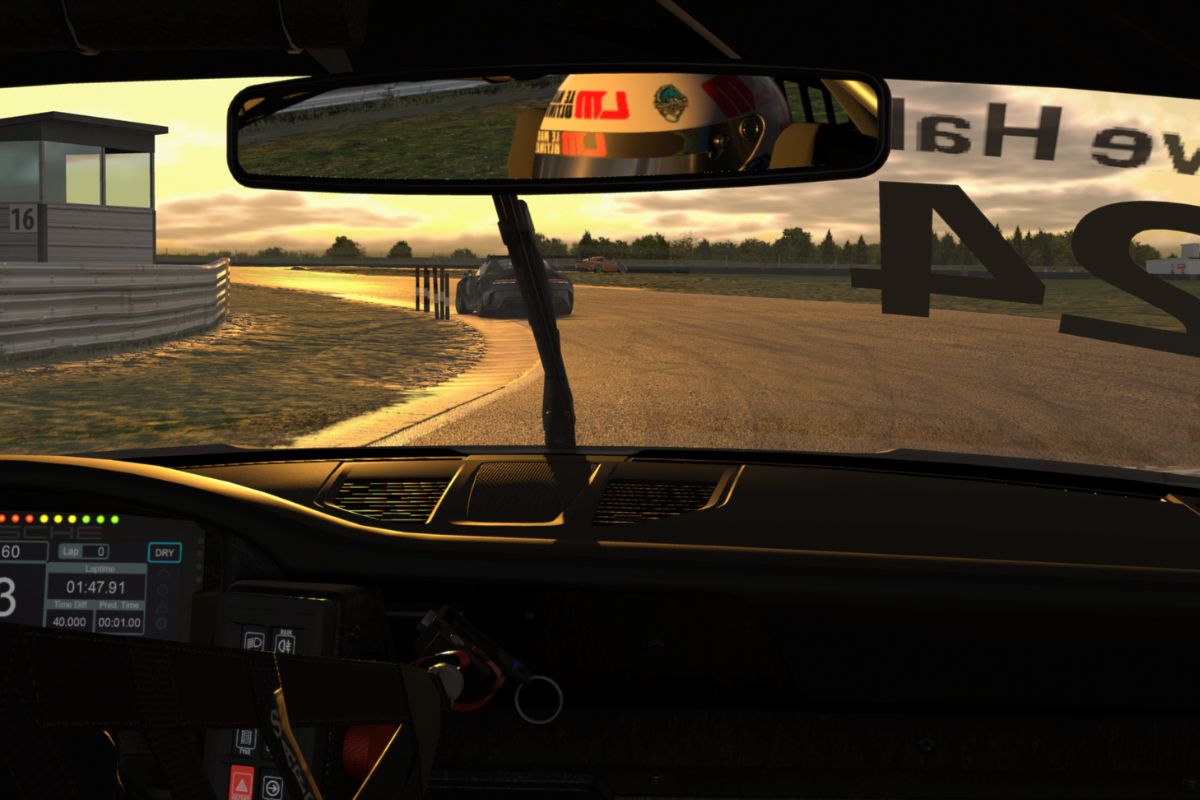
Getting Started with Porsche Club GB Sim Racing
Everything you Need to Know to get Online and get Racing
How to get Started in Sim Racing
Everything you need to know to get online and get racing.
Recently, Sim racing and esports have gained more attention and interest, but simulations have always been a valued part of any training regime. Driving sims are great for learning track layouts and practising for a race.
At Porsche Club GB, we run our own sim racing championship on iRacing and if you would like to take part, here is how you can get started:
The following
three price points look at different specifications that will allow you to run iRacing:
Equipment You Will Need to Get Started
PC Requirements
Although there are plenty of driving options on game consoles, the club championship requires a PC. iRacing's minimum system requirements are:
4-core CPU
16 GB of RAM
Graphics card with at least 6GB of dedicated memory
You can also run Windows under Boot Camp on a Mac if it meets those hardware requirements.
The following examples do not come with a keyboard, mouse, or a display.
If possible, a wired network connection is preferred as there is less chance of the connection dropping.
Entry Level
This specification will run iRacing comfortably.
Intermediate
This specification provides improved graphics quality and enables a multiple-screen setup.
VR (Virtual Reality) may work with some tweaking of settings.
VR & Premium
This specification has been designed for VR and detailed graphics without compromising performance.
Wheels and Pedals
At minimum, you will need:
A steering wheel
Pedals.
A gearshift is a nice-to-have, but most race cars now have paddle-shift.
The Cayman GT4, 911 Cup and 911 GT3 cars in iRacing are all sequential shifters, so the paddles you find standard on most wheels will suffice. Again, let us look at three price points:
Entry level
Thrustmastert248r
LogitechG920/G29
Intermediate
Direct-drive wheels are widely regarded as the best option because the steering wheel is connected directly to the motor. The advantage is not simply greater force, but increased detail. Racing simulators transmit a wealth of information about the car and track surface, and a powerful direct-drive wheel can reproduce these subtle nuances more clearly, providing a more immersive and realistic driving experience.
Fanatec ClubSport
Fanatec ClubSport Pedals
Moza R9 – R25
Moza Steering Wheels
Moza Pedals
Premium:
Sim racing hardware has developed rapidly in recent years to meet growing demand. From wheels and pedals to complete cockpits, below are some of the top-of-the-range options available.
Simucube – a direct-drive wheel base.
Fanatec Podium – a direct-drive wheelbase.
SimLab Wheelbases
Heusinkveld Sprint and
Ultimate pedals – designed to provide a highly realistic driving experience.
A direct-drive wheelbase paired with a standard steering wheel will typically require separate shifters and controls. For a top-tier set-up,
Ascher Racing is worth considering.
It's worth noting that most of the time DD wheelbases come without a wheel, which you'll need to add.
Sim Rigs
To get started, clamp a wheelbase to a desk and place wedges behind your chair to stop it from moving. However, this setup does have limitations, especially for seating and braking consistency.
For those looking to upgrade further, a sim rig is the next step, which effectively creates a virtual cockpit. The key consideration is rigidity; the harder you drive, the more important it becomes to avoid flexing. A solid rig keeps your driving position consistent, improves confidence under braking, and supports more consistent, competitive driving.
Entry level
Suitable for belt-driven wheel systems
GT Omega
Next Level
Enthusiast
Designed for direct-drive wheelbases and higher pedal forces, typically using aluminium profile or thick steel tubing.
GT Omega
Sim-Lab
RSeat
Next Level
Premium
For those seeking the ultimate set-up
.
Vesaro
Many premium rigs can be upgraded over time with accessories such as motion systems, building towards a professional-grade simulator.
Here are a couple of examples to help you decide which setup is right for you:
Example 1 – The architecture is a couple of years old, but it runs iRacing on triple 1080p screens with no issues.
PC Spec:
CPU: Ryzen 5 5800X3D
Motherboard: B550 Aorus Pro AC
RAM: 16GB
Graphics Card: Nvidia GeForce 4070 Super
Display – 3 x 27” 1080p curved-screen monitors, plus an additional monitor for displaying other data.
Rig, Wheel, Pedals, etc.:
Rig: GT-Omega Titan
Wheelbase: Moza R9
Wheel: Moza GS GT Wheel
Pedals: DC Sim Racing DC2
Example 2 – much more up-to-date system.
PC Spec:
CPU: Intel® Core™ Ultra 7 265KF
Motherboard: MSI Z890 Gaming WIFI
RAM: 32GB (2x16GB) DDR5 5600MT/s
GPU: NVIDIA® GeForce RTX™ 5080 16GB (Single Card) Kingston Fury Beast
Display: 32" MSI triple curved screens
Rig, Wheels, Pedals, etc:
Rig: GT1 Evo rig from SimLab
Wheelbase: Simplicity SW20 V3 - 20NM direct drive system
Wheel: Cube F-Pro wheel
Pedals: Heusinkveld Sprint brake and throttle (no clutch)
How?
For the club championships, we will be racing on
iRacing. iRacing is a top-quality motor-racing simulator that connects the global sim-racing community to race. There is an
annual subscription fee plus
additional small costs for cars and tracks.
Note that iRacing typically offers membership discounts in December.
The PCGB sim racing community uses Discord, which you can access
here. Think of it as a virtual paddock, where members can share advice, discuss setups and connect with fellow drivers. We also organise test sessions and fun, non-championship races.
Discord offers useful features, including voice channels, screen sharing, and driver coaching, making it the hub of our sim racing community.
If you have never raced before and want to learn some basics, the
Racing Line is a great start;
Sim Racing Cockpit is also a detailed guide by Richard Baxter, and iRacing also have
a useful video series.
Fundamentally, sim racing is no different from real-world racing; vision is the number one skill to develop. However, there is no getting away from the fact that there is no physical sensation of motion (unless you go for a premium motion rig) to communicate what the car is doing.
Force feedback through the steering wheel plays a key role in bridging that gap, but sound is just as important. Before long, you will learn to interpret what the car is doing through a combination of what you see, hear, and feel through the wheel. Your brain quickly adapts to the lack of physical motion, and it soon becomes second nature.
Before you know it, you will be confidently racing in a fast-moving pack of cars and enjoying your first race win.